
Few cities have seduced artists, designers and travelers quite like Istanbul, with its romantic exoticism and singular position between two continents. Byzantine and Ottoman, European and Asian, ancient and modern — cultures and centuries layered one upon another.
This fall, the V&A brings those layers vividly to life in Constantinople to Istanbul: One City, Two Empires. Opening November 7, the exhibition spans an extraordinary 1,600 years, from AD 330, when Constantine the Great refounded the ancient Greek settlement of Byzantium as Constantinople, the new capital of the Roman Empire, through the end of the Ottoman Empire in 1922. More than 200 objects — mosaics and manuscripts, jewels, silks, ceramics, paintings and precious metalwork — trace the city’s remarkable evolution.
Fortunately, history here comes with plenty of spectacle.
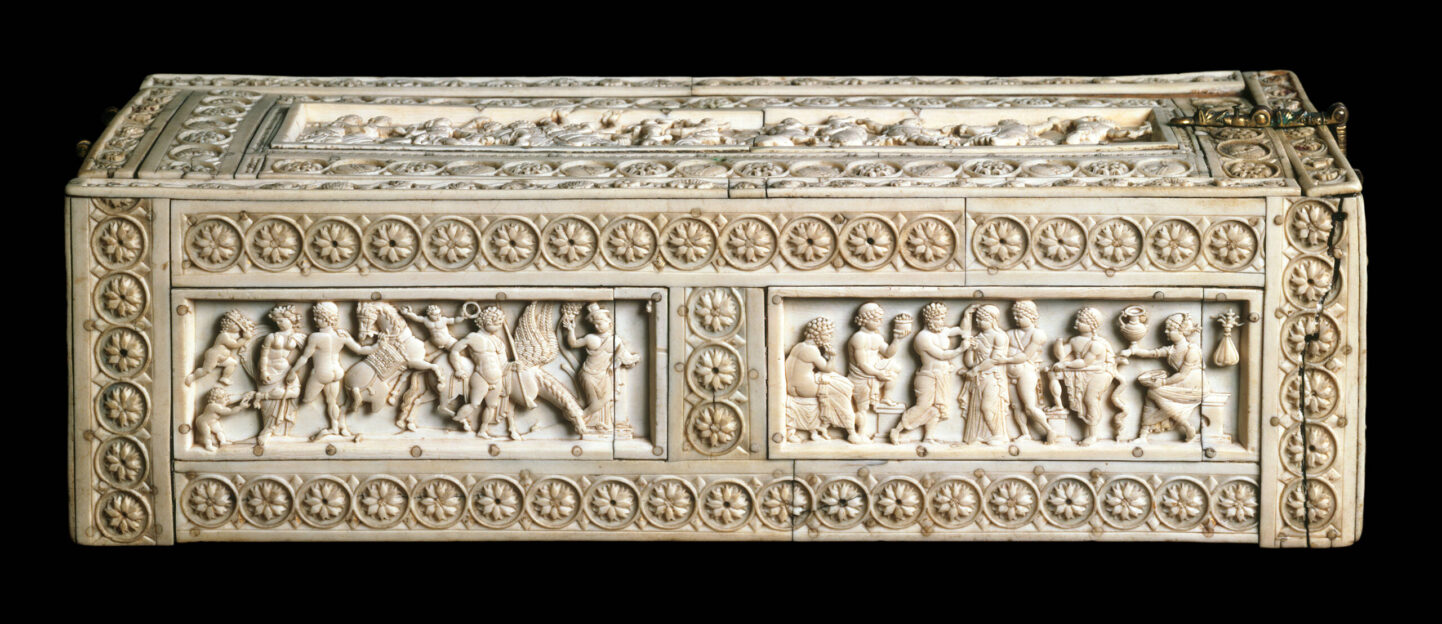
Sometime in the second half of the tenth century, a craftsman in Constantinople covered a wooden box with carved ivory: Zeus as a bull carrying off Europa, centaurs and maenads dancing to Hercules’s music, Bacchus in a chariot drawn by panthers. It was made for someone of high standing, possibly at the court of Constantine VIII. Barely sixteen inches long, the Veroli Casket brings together Greek myth, Roman craft and Byzantine patronage — a miniature expression of a city that never belonged to just one culture.
Then came 1453.
Sultan Mehmed II conquered Constantinople, bringing the Byzantine Empire to an end and making the city the capital of the Ottoman Empire. Hagia Sophia, formerly the great imperial church of Byzantine Constantinople, became a mosque — and four centuries later it needed a good restorer. Sultan Abdülmecid hired the Swiss-Italian architect Gaspare Fossati, who uncovered the Byzantine mosaics, dutifully recorded them and, since Hagia Sophia was still a working mosque, covered them right back up. His lithographs were published in London in 1852. Byzantine building, Ottoman patron, Swiss architect, English publisher: you could hardly invent a better portrait of the city.
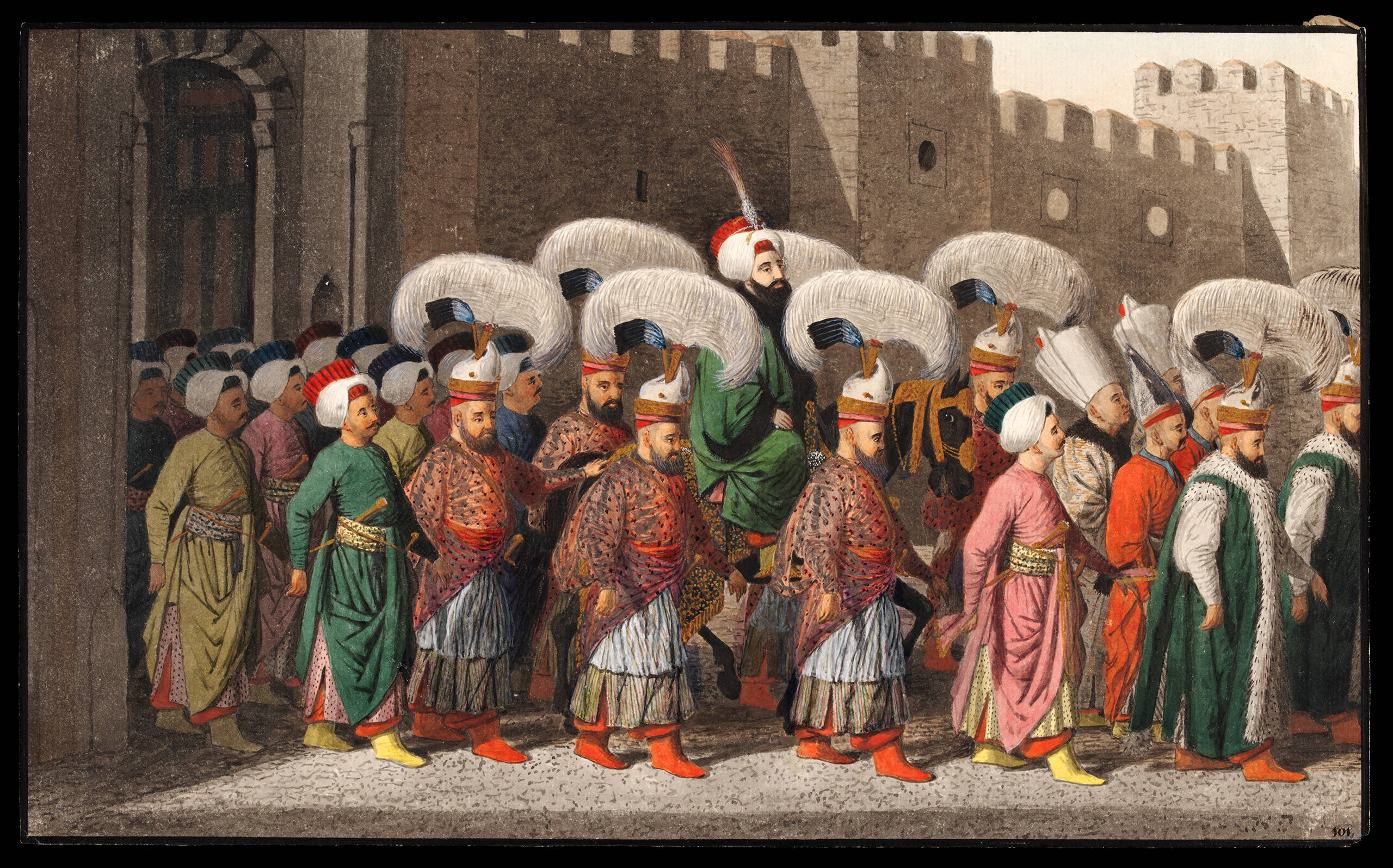
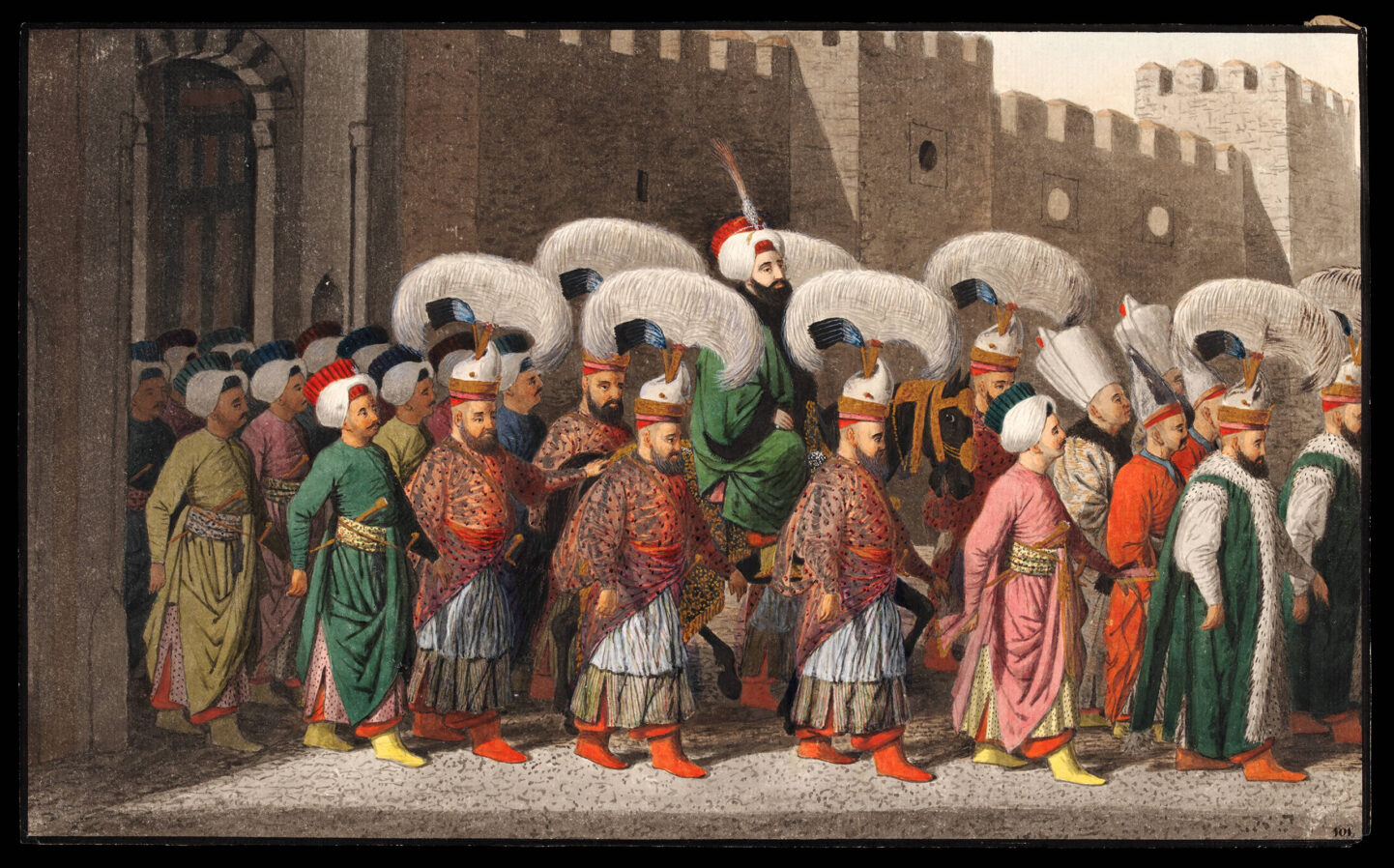
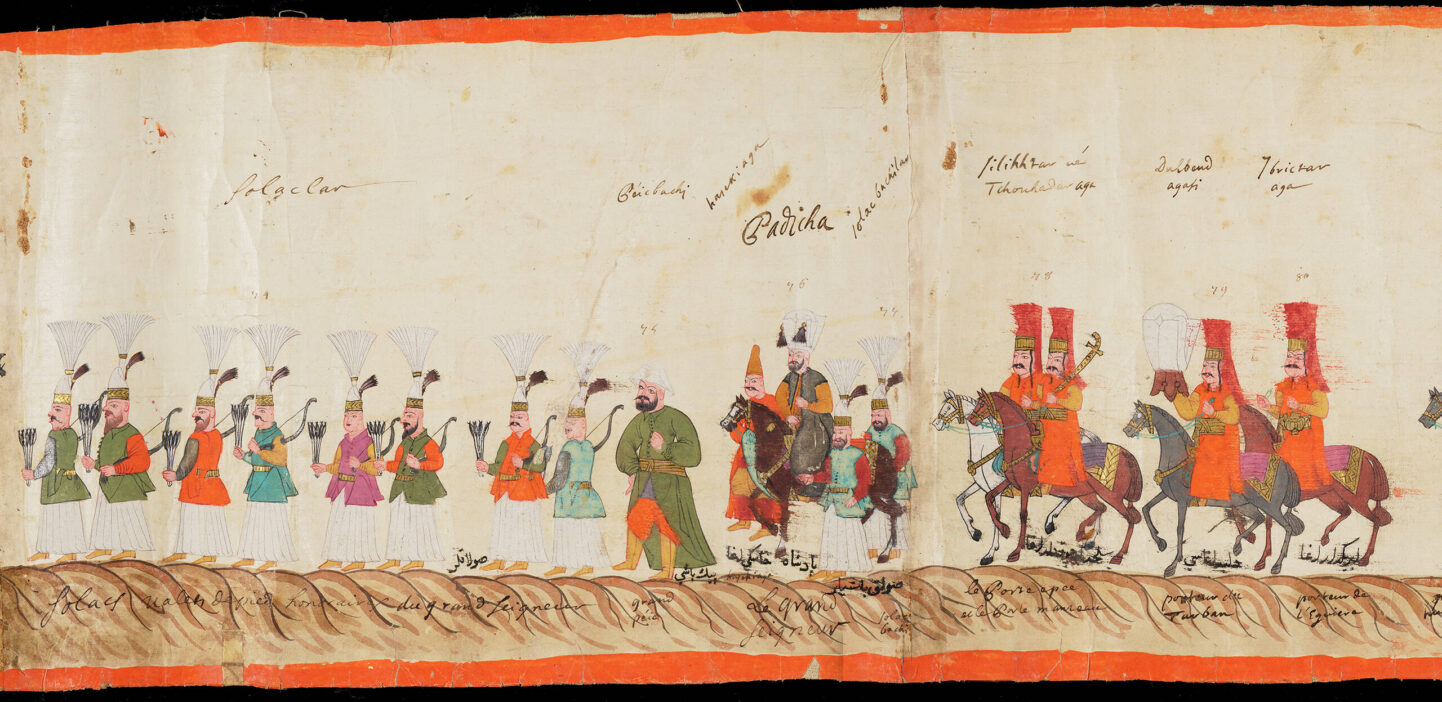
The Ottoman court understood spectacle every bit as well as its Byzantine predecessors. One of the exhibition’s stars is a remarkable seventeenth-century scroll recording an Ottoman procession in seemingly endless detail. Another watercolor, from about 1809, catches the Sultan riding out in procession for Friday prayers. Silk, ivory, silver, gold, precious stones and elaborate ceremonial dress were paraded quite literally through the streets. Magnificence was part of the language of power.
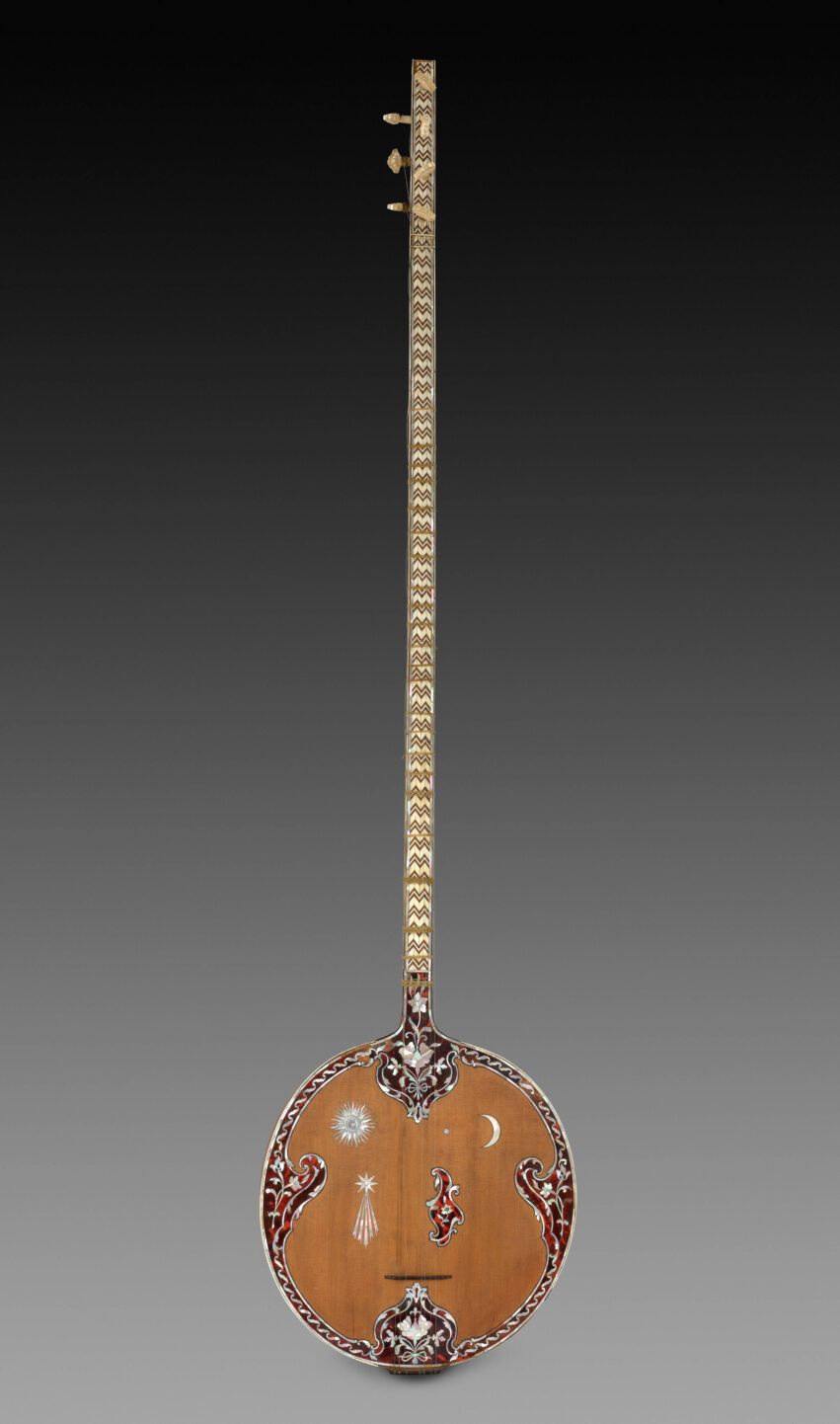
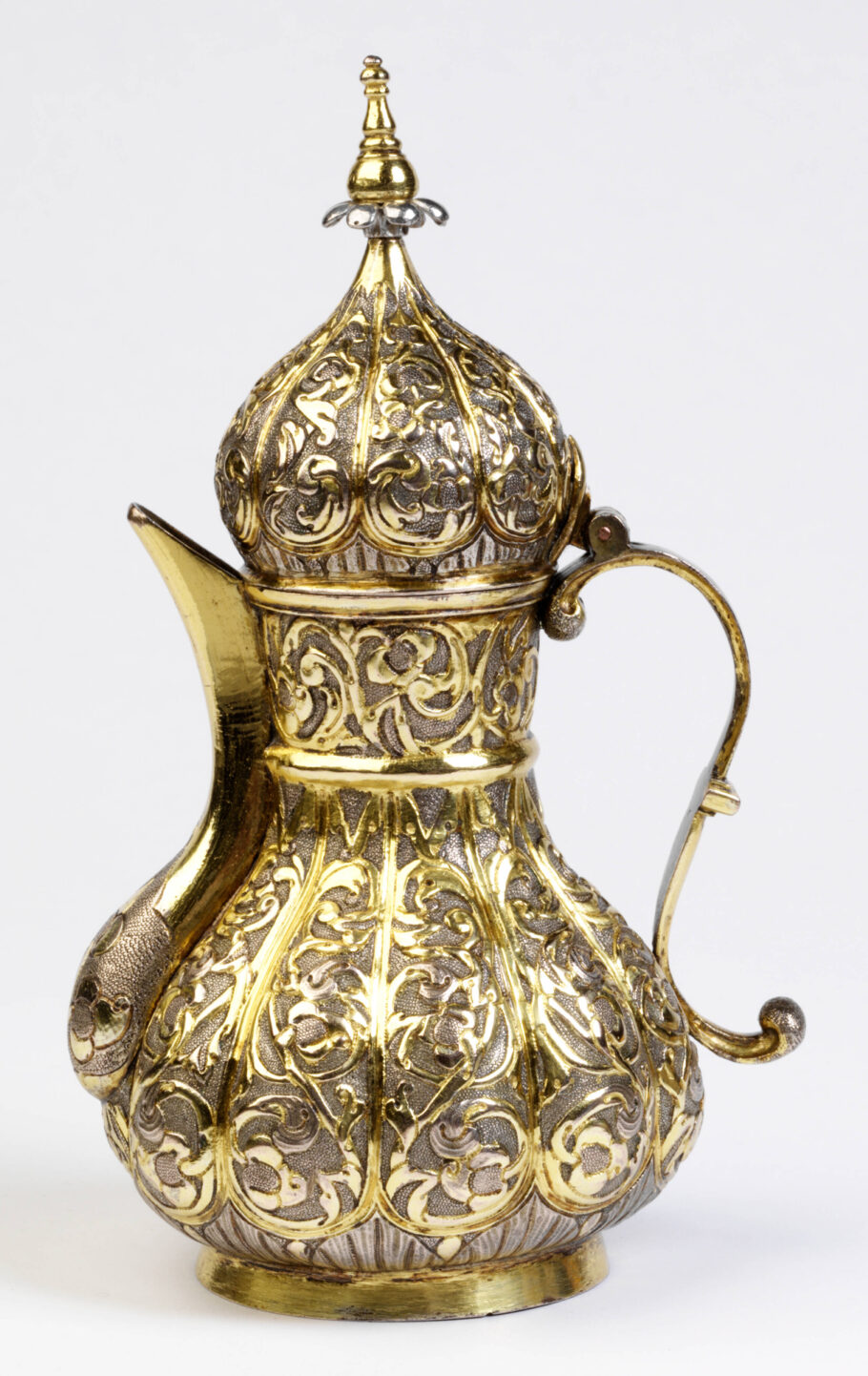
But Istanbul was never only a city of emperors and sultans. The exhibition eventually spills out into the city itself — its coffee houses and bathhouses, music and leisure, fashions and faiths. And it’s these everyday things I would make a beeline for: an elegant long-necked tambur from around 1750 and a wonderfully extravagant nineteenth-century coffee pot in silver-gilt chased with flowers.
By the nineteenth century, the cultural traffic between Istanbul and Europe had become more complicated still. Few people embodied it better than Osman Hamdi Bey.
The son of an Ottoman grand vizier, he was sent to Paris to study law but found painting considerably more interesting, studying with leading French Orientalist painters before returning to Istanbul. He would go on to become an archaeologist and the founding director of the Imperial Museum, helping to shape how the Ottoman Empire collected and presented its own past.
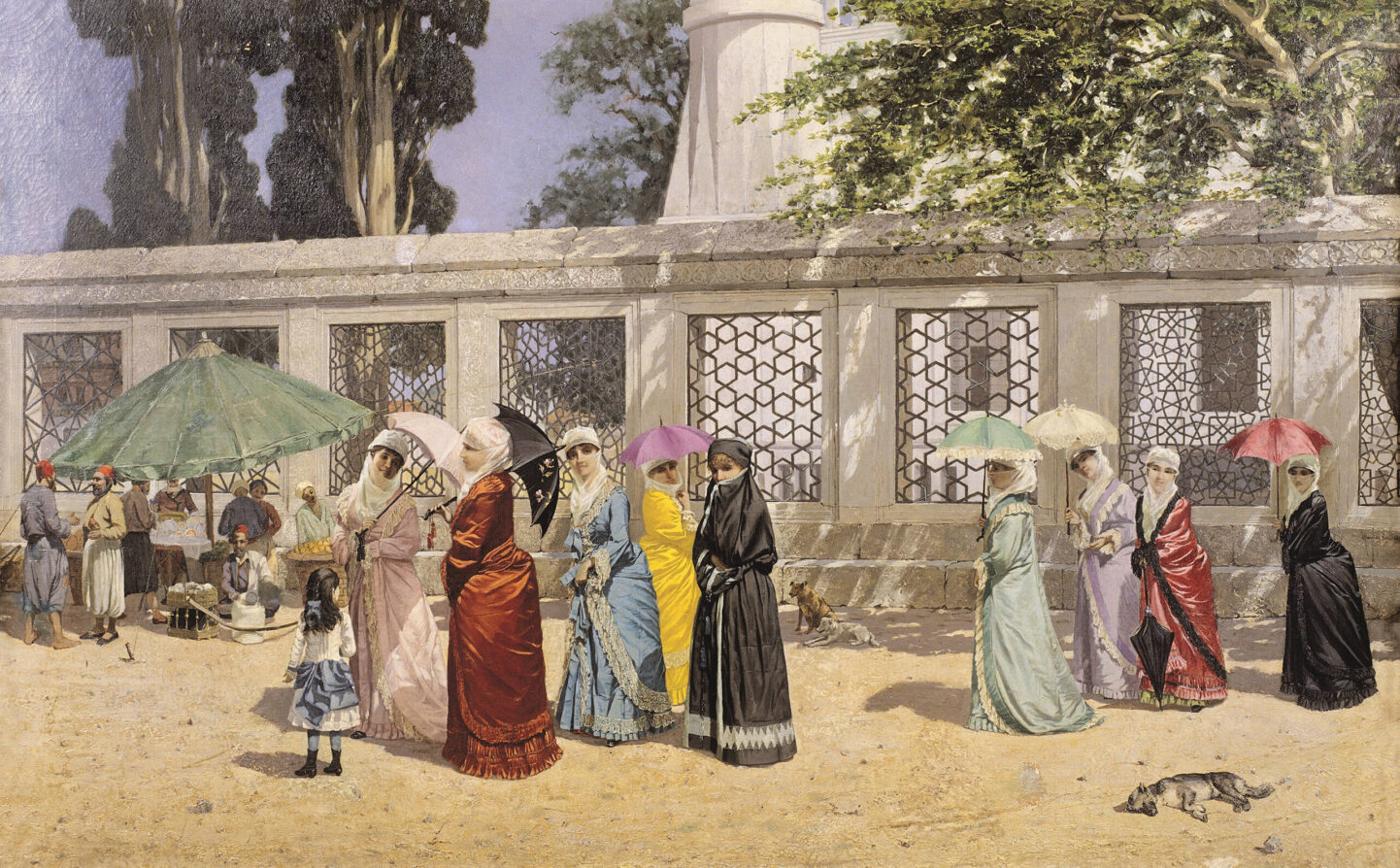
His 1887 Ladies Taking a Walk, included in the exhibition, catches four women out in Istanbul, their vividly colored clothes and fashionable parasols offering a glimpse of a city negotiating tradition and modernity. There is a delicious irony in Osman Hamdi Bey painting the Ottoman world in a style he had learned from European Orientalists — Western artists who had themselves made careers imagining the East.
Istanbul, once again, looking at itself through someone else’s eyes and making the view its own.
All of which may explain why I seem to have been circling Istanbul on Quintessence for years.
It began, at least on these pages, with Cornucopia. I had long remembered seeing Mica and Ahmet Ertegun’s whitewashed house in Bodrum and being immediately smitten by its combination of exotic setting and Turkish furnishings. Then in 2014, artist and Quintessence reader Tania Vartan wrote to me — from Turkey, naturally — insisting I discover Cornucopia. She was right.
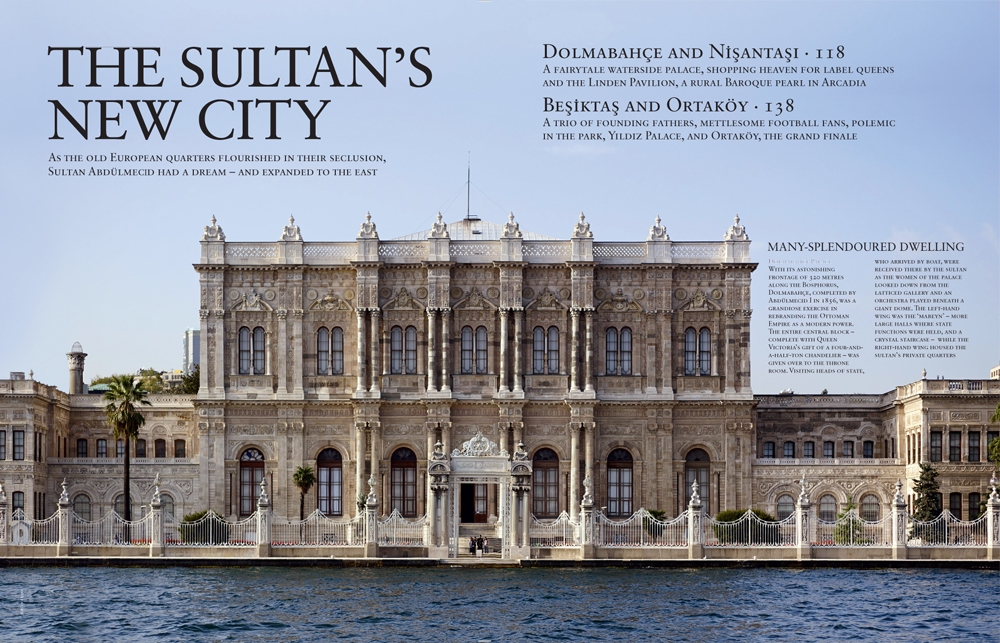
The magazine opened a much wider window onto Turkey: Topkapı and Süleymaniye, Ottoman palaces and gardens, İznik ceramics, textiles, architecture and the wonderfully layered cultural life that rarely fits into a conventional travel story. Monocle founder Tyler Brûlé once described Cornucopia as a cross between World of Interiors and National Geographic with a Turkish twist, which gives you some idea why it appealed to me.
Not long afterward came Sevan Bıçakçı, whose jewels might be the most fantastical expression of Istanbul’s layers I know.
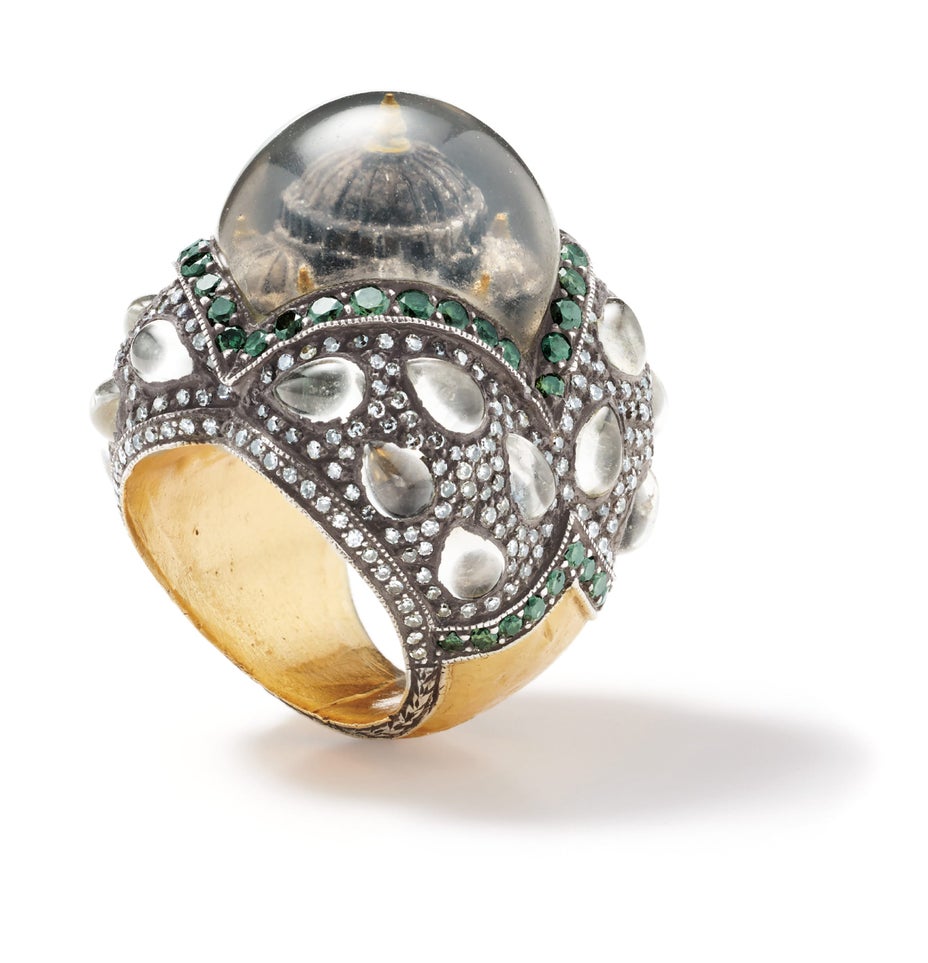
Born in Istanbul to Armenian parents and apprenticed as a boy in the Grand Bazaar, Sevan developed a visual language in which Byzantine mosaics, Ottoman architecture, Persian painting and Islamic calligraphy coexist quite happily — often within a single ring. His famous reverse-intaglio technique allows entire buildings to appear beneath great domed gemstones. Hagia Sophia can live under rock crystal; mosques and palaces become miniature worlds surrounded by diamonds, turquoise and gold.
“Jewelry” seems almost inadequate. They are tiny pieces of Istanbul you can wear on your hand.
And then there is Serdar Gülgün, whose book Ottoman Chic brought all those layers home — quite literally. His nineteenth-century Istanbul hunting lodge is a glorious multicultural mélange where Ottoman calligraphy and Ushak carpets live alongside Syrian mother-of-pearl furniture, Murano mirrors and chandeliers, Chinese porcelain and European antiques. The house feels historical without ever feeling like a historical reconstruction.
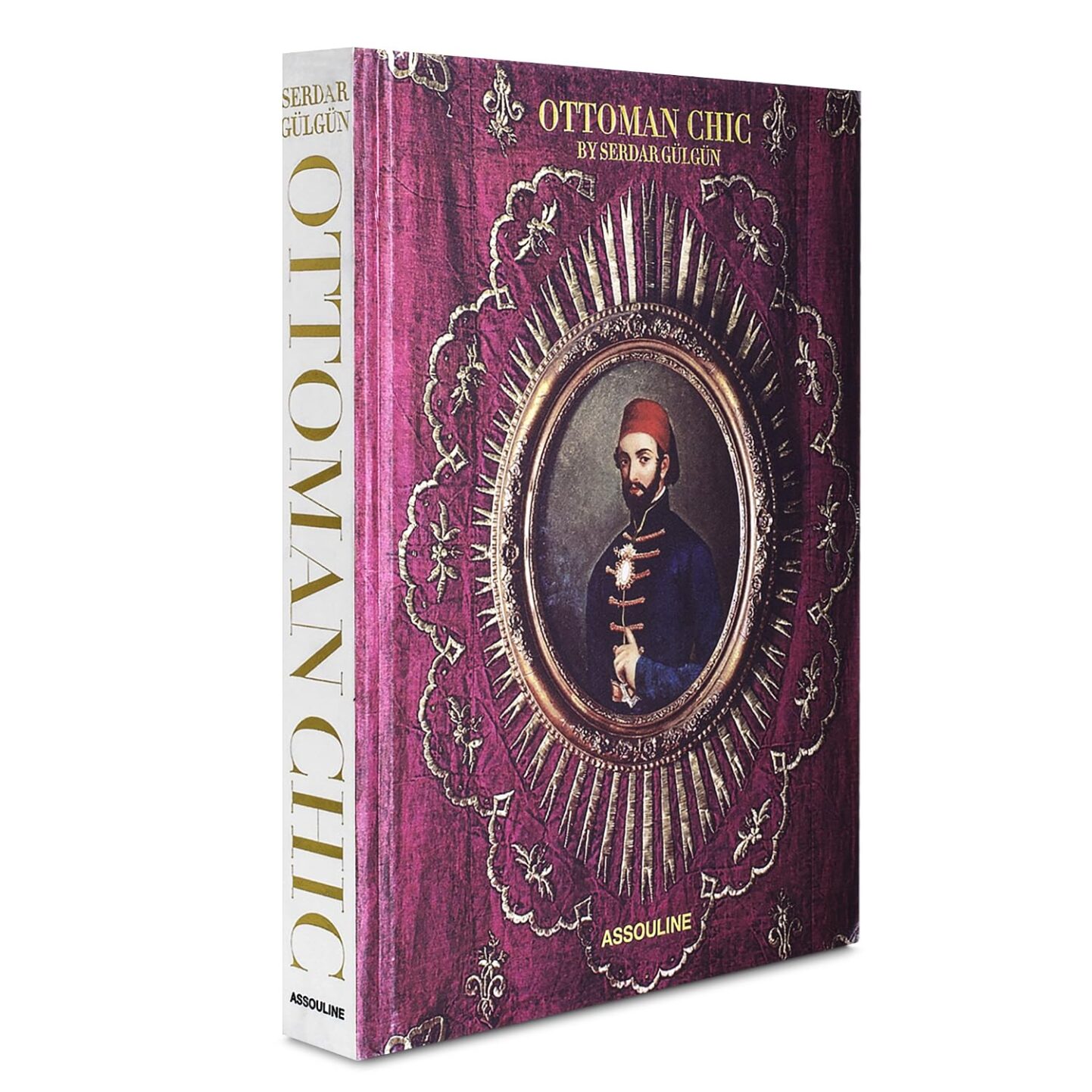
When I wrote about it in 2015, I quoted the book’s description of Istanbul as a city of “decorative layers.” Looking at the V&A exhibition more than a decade later, the phrase feels particularly apt.
Istanbul’s cultural exchange was never one-way. The V&A continues to follow Byzantine and Ottoman ideas as they traveled west, eventually appearing in nineteenth-century European textiles, ceramics and interiors and influencing designers including Owen Jones and William Morris.
It is a subject I’ve explored before — the long and sometimes complicated history of artists looking beyond their own worlds for inspiration. Motifs are borrowed, techniques adapted and, in the process, something new emerges.
Istanbul had the geographical good fortune to sit at the crossroads.
For sixteen centuries, things arrived — people, religions, objects, ideas — and rarely left quite as they came.
Perhaps that is the real seduction.
Constantinople to Istanbul: One City, Two Empires
Victoria and Albert Museum, London
November 7, 2026 – May 9, 2027


