
As winter continues to unfurl on New York’s Upper East Side, The Winter Show 2026 returned to the hallowed halls of the Park Avenue Armory, ushering in the art and antiques season with a singular blend of historical depth, extraordinary craftsmanship, and utter delight. In its 72nd edition, this beloved fair, benefitting the East Side House Settlement, stands as a testament to both enduring tradition and fresh discovery, where over 70 carefully vetted international dealers present objects that span nearly 5,000 years of human creativity.
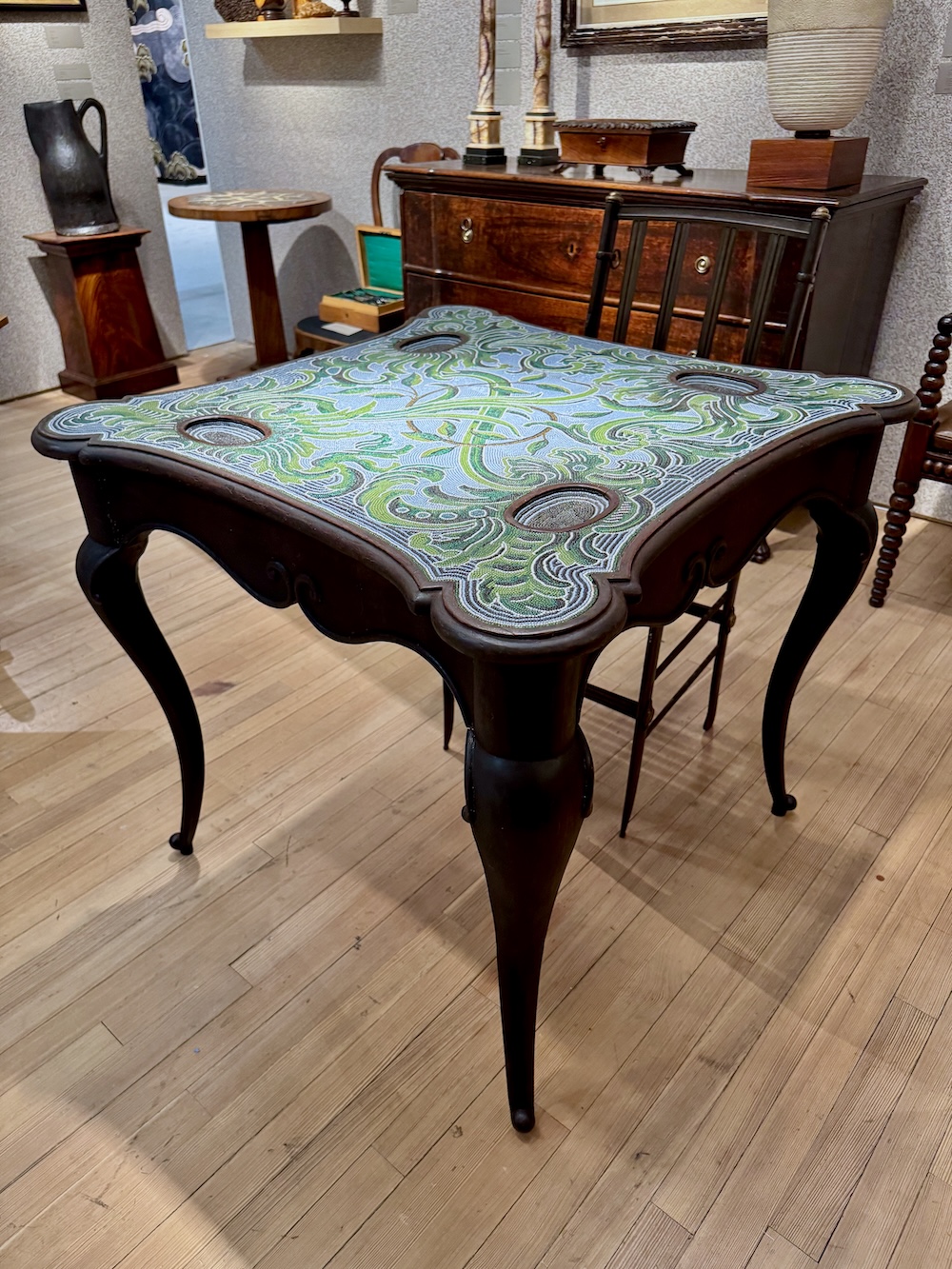
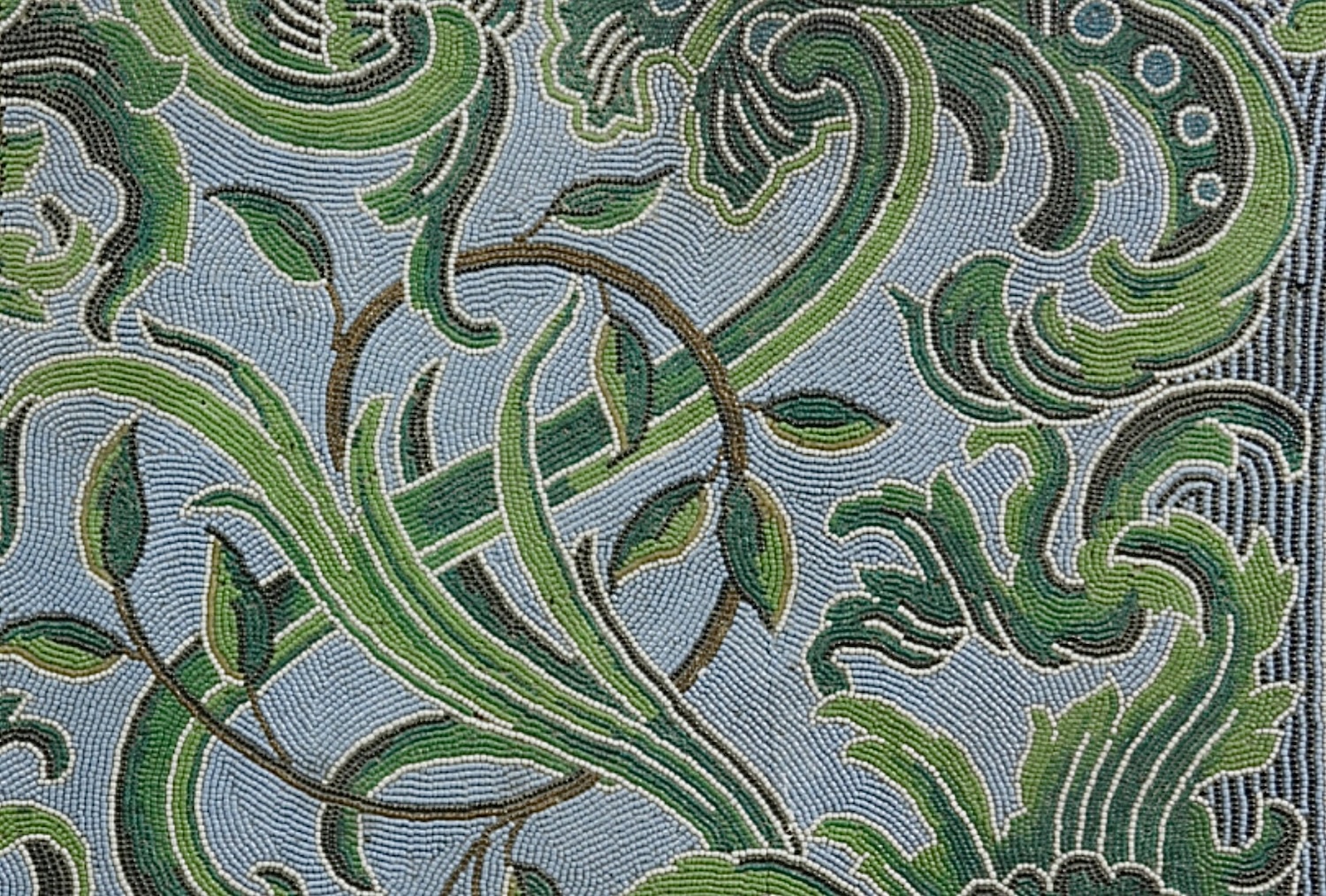
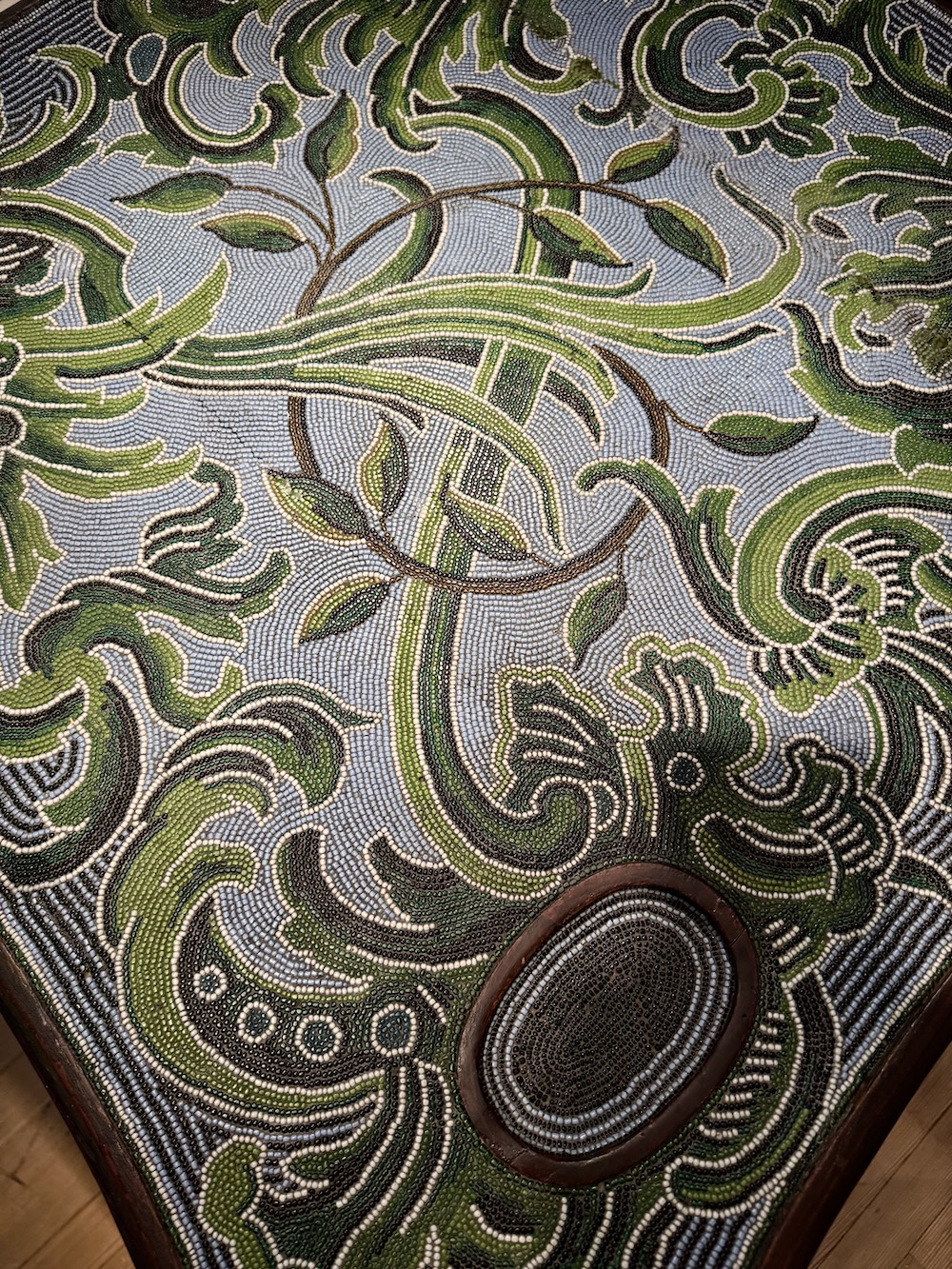
There is a particular kind of quiet confidence to The Winter Show that invites a slower more substantive way of looking. This sense of refinement is immediately evident in a perennial favorite booth, Cove Landing, where Angus Wilkie and Len Morgan bring scholarship, nuance and their distinctive collective eye to their compelling collection. The star of the booth had to be the North German Rococo games table, above. By Johann Michael van Selow Braunschweig, the intricate beadwork in a seemingly contemporary color scheme belies its 1755 origin.
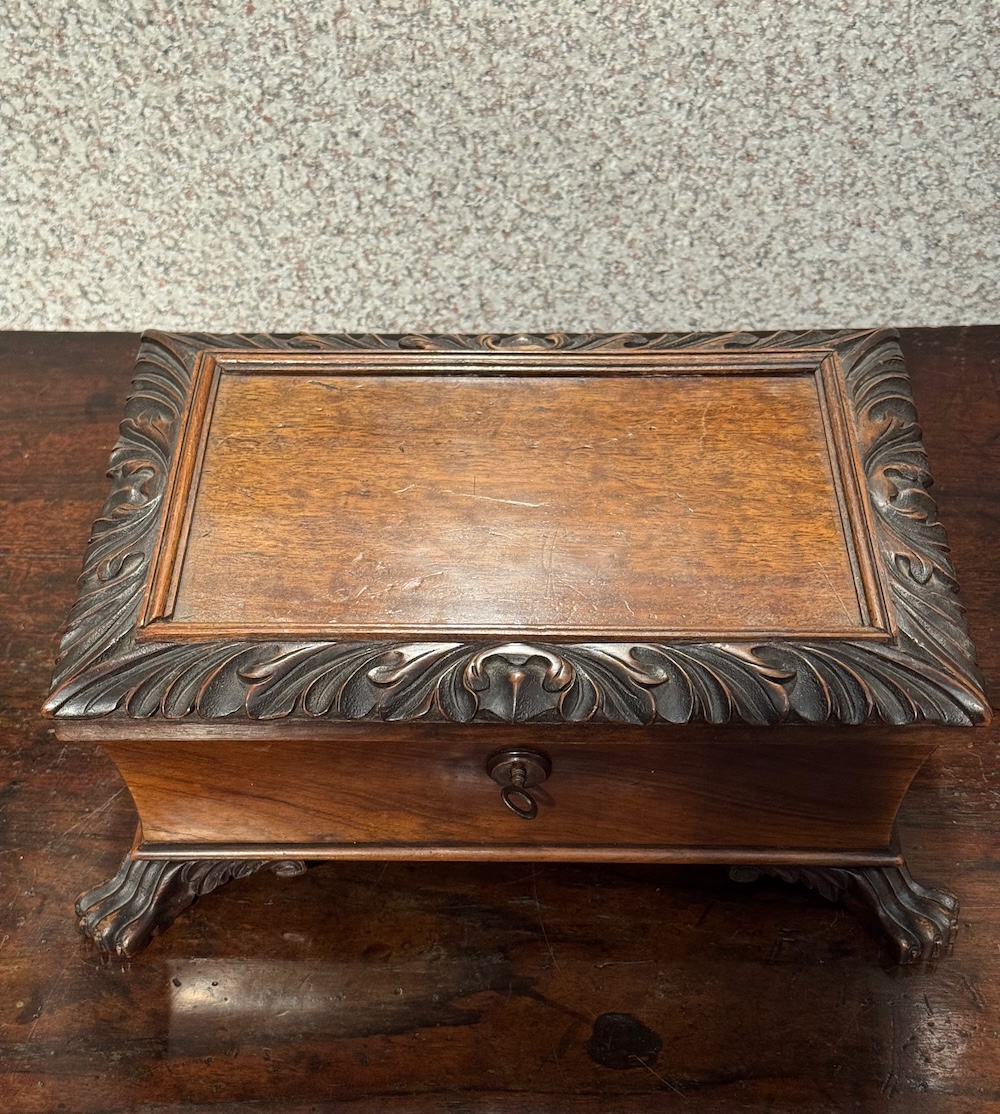
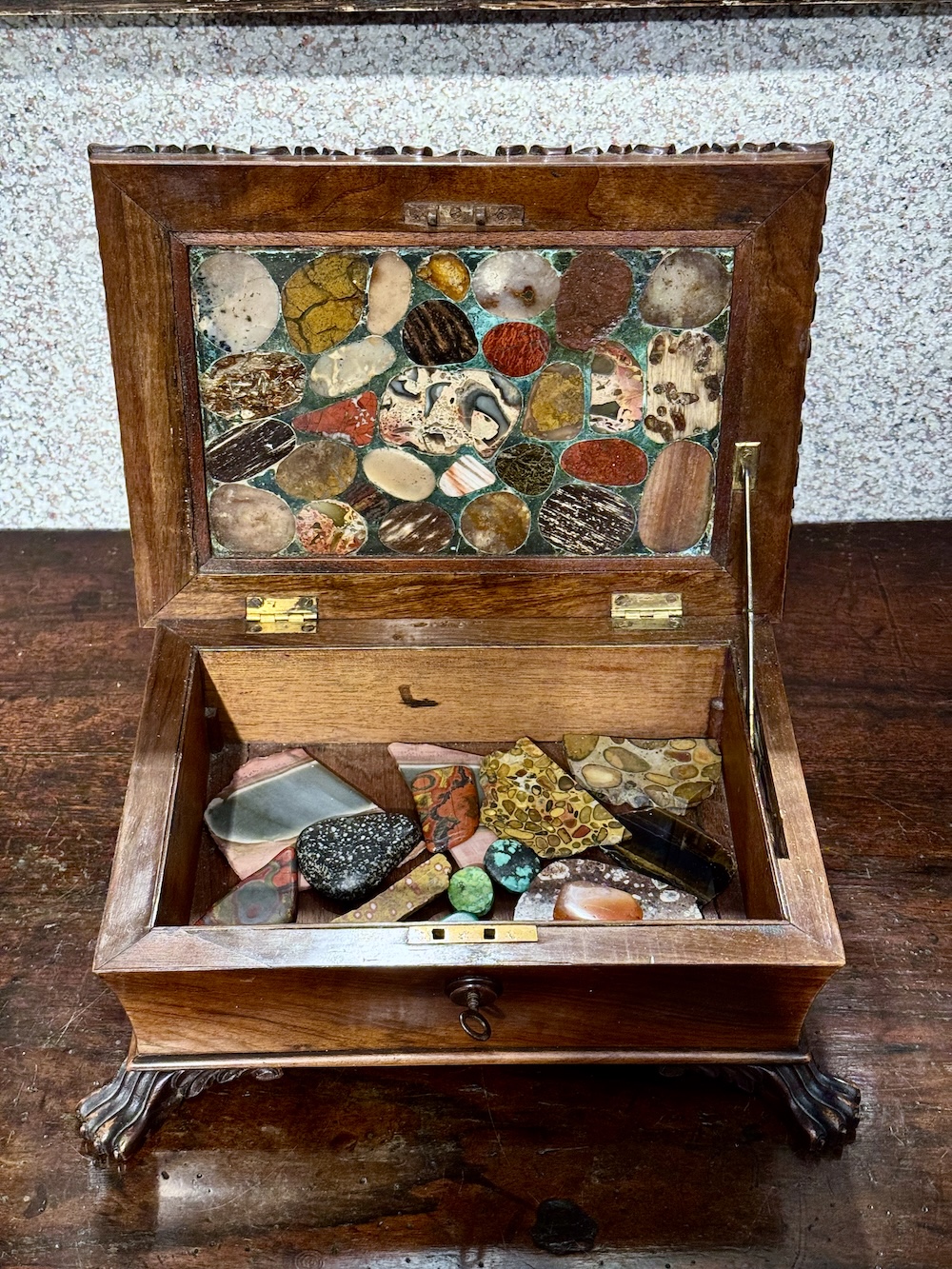
Another favorite was the William IV carved mahogany box, below. Its sturdy elegance and lion’s paw feet typical of the period hid the surprise of the interior – a lid of specimen inlaid marble. The loose marble specimens inside were an included treat from the dealers.
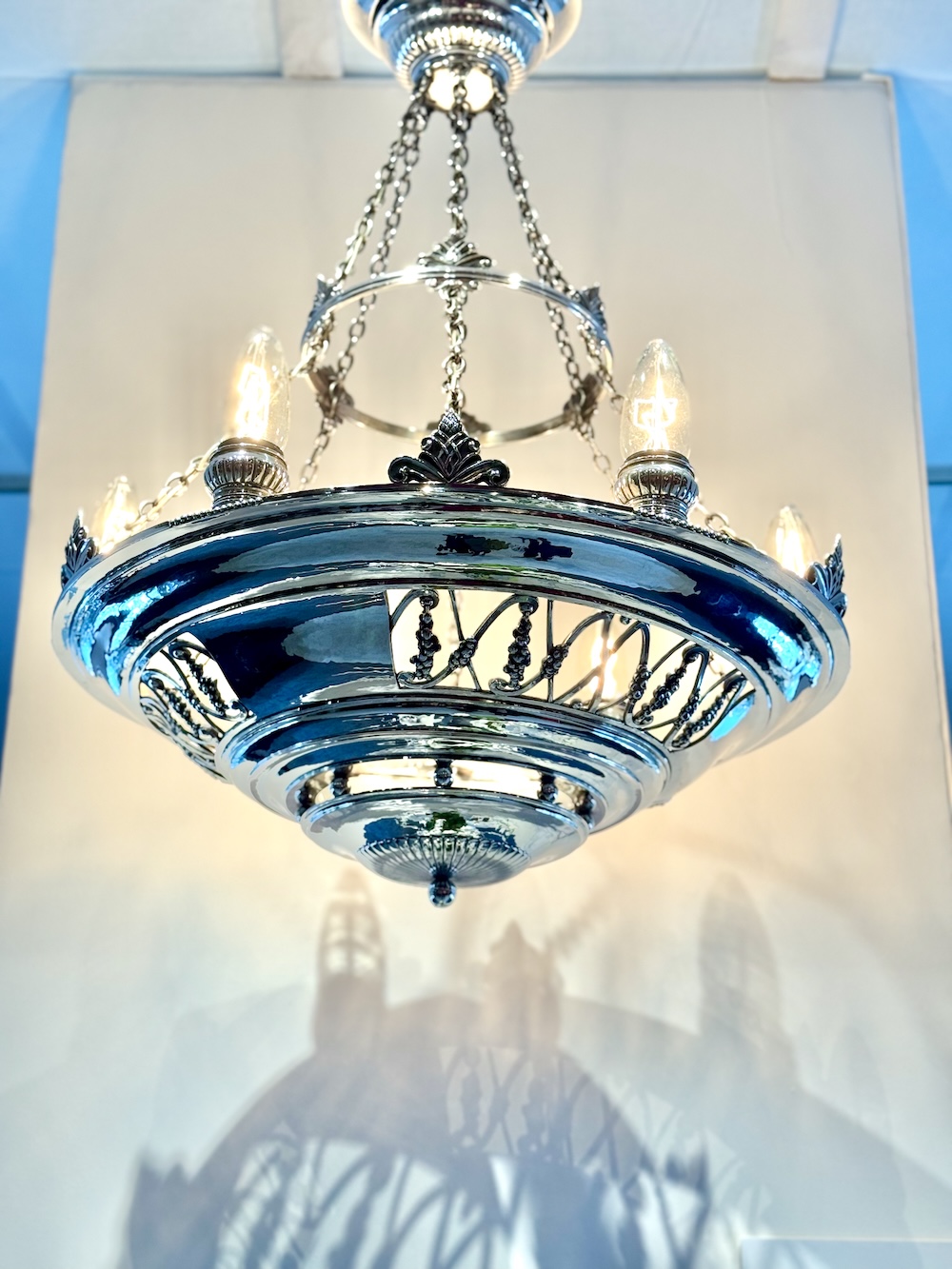
Three new exhibitors were particularly noteworthy. Greg Pepin Silver presented a thoughtful selection of historical Georg Jensen that was impressive for its coherence and range. Considered the rarest piece of Georg Jensen known, this chandelier was designed as the centerpiece for the Copenhagen flagship store in 1918, combining “the union of craftsmanship, modern technology and design innovation.
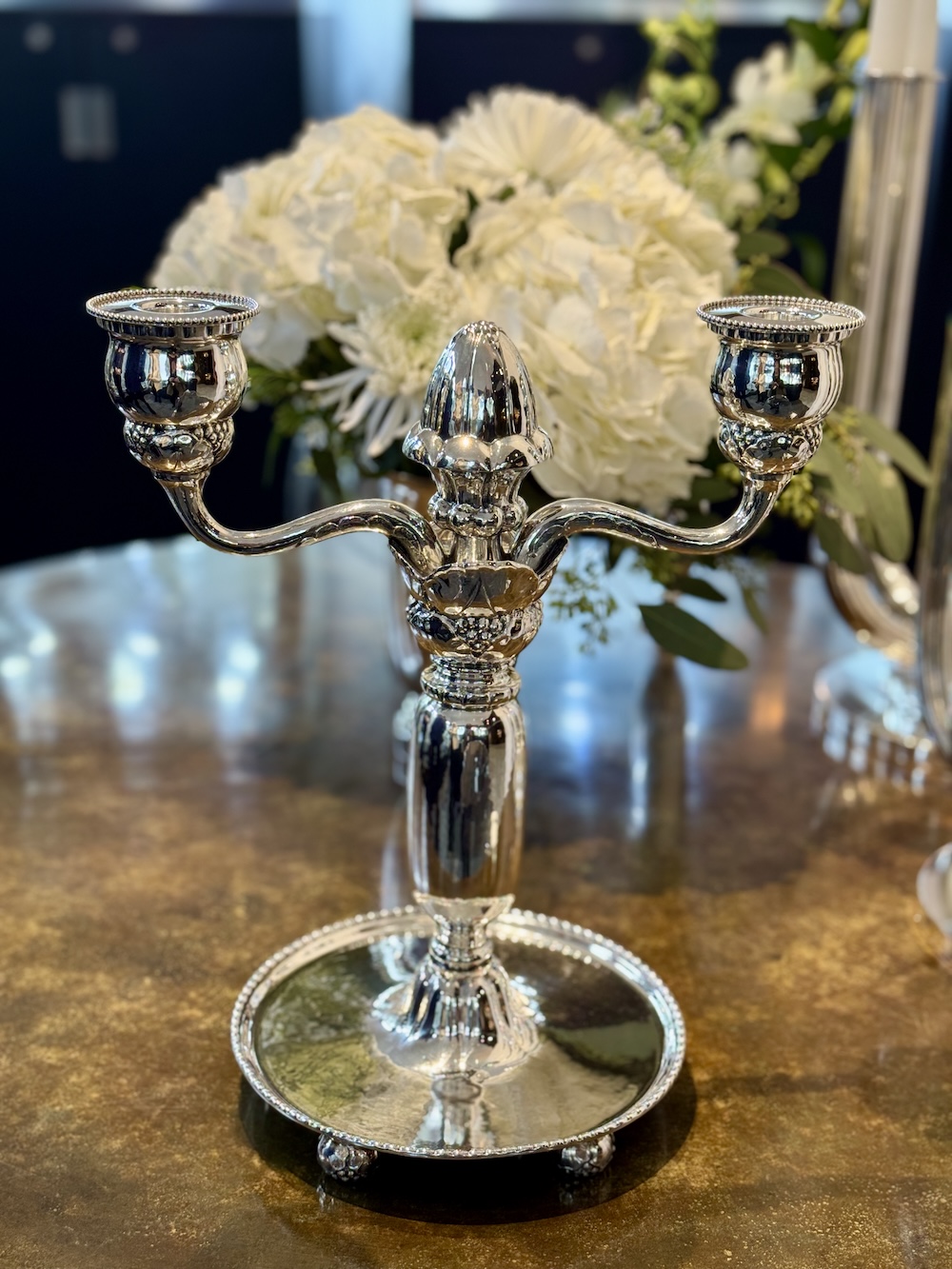
One of pair of candelabras from 1918 showcases the exceptional details of Georg Jensen silversmithing with intricate motifs crafted by hand.
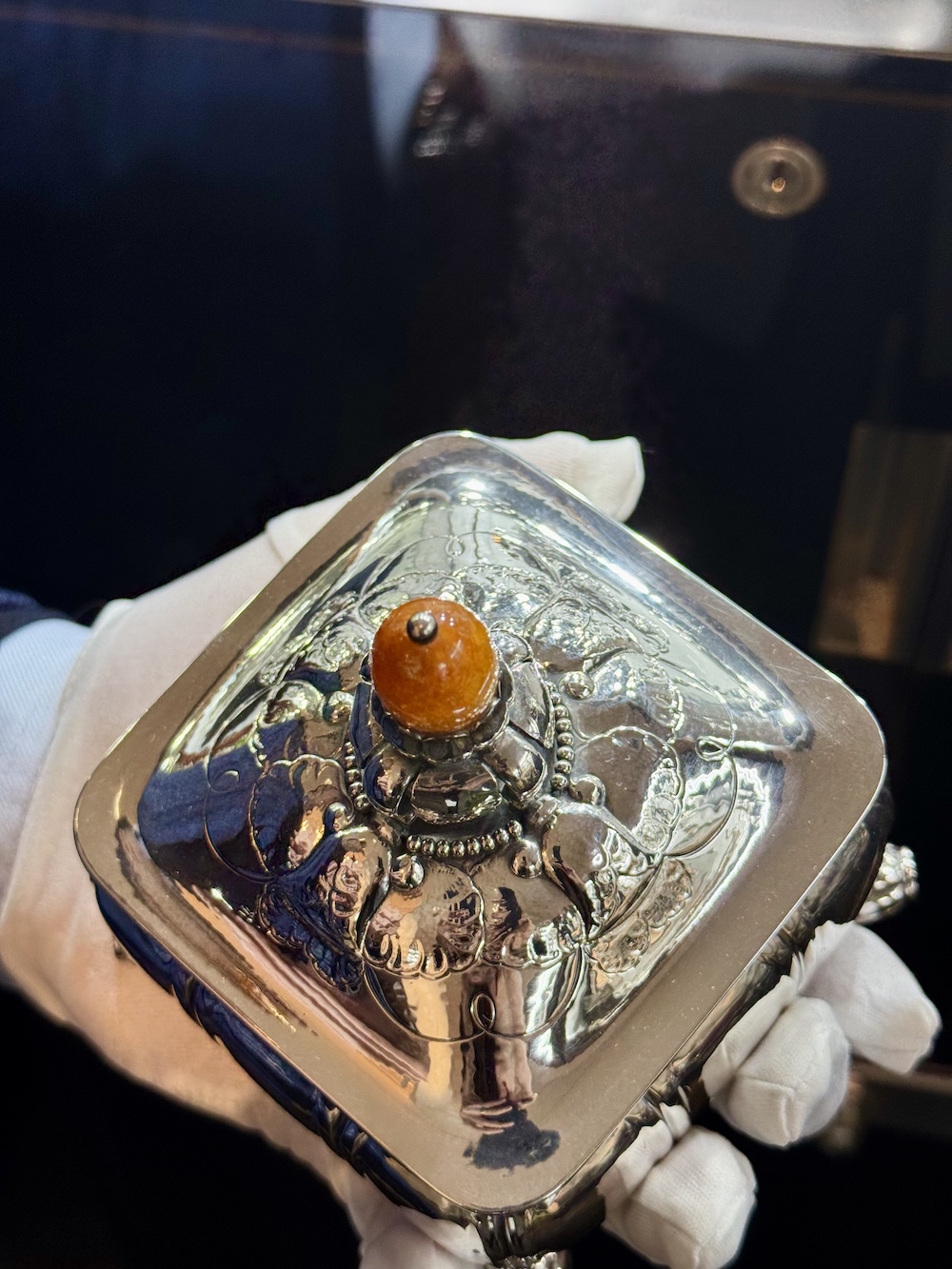
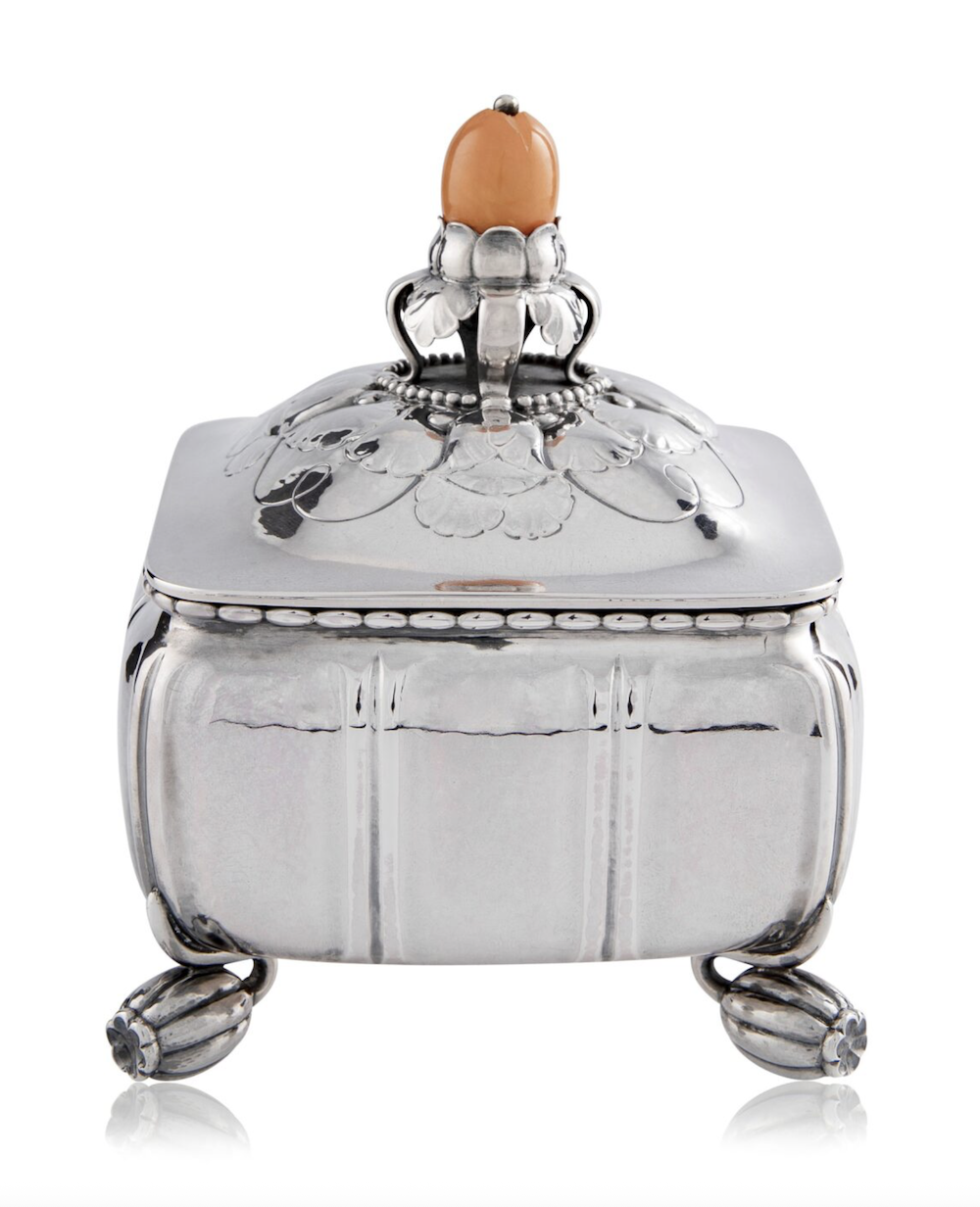
This exquisite silver box, designed by Georg Jensen in 1913, features an amber agate finial set within an entirely hand chased array of signature Jensen leaves. Continuing the floral theme, the box is set on four feet shaped like flower buds.
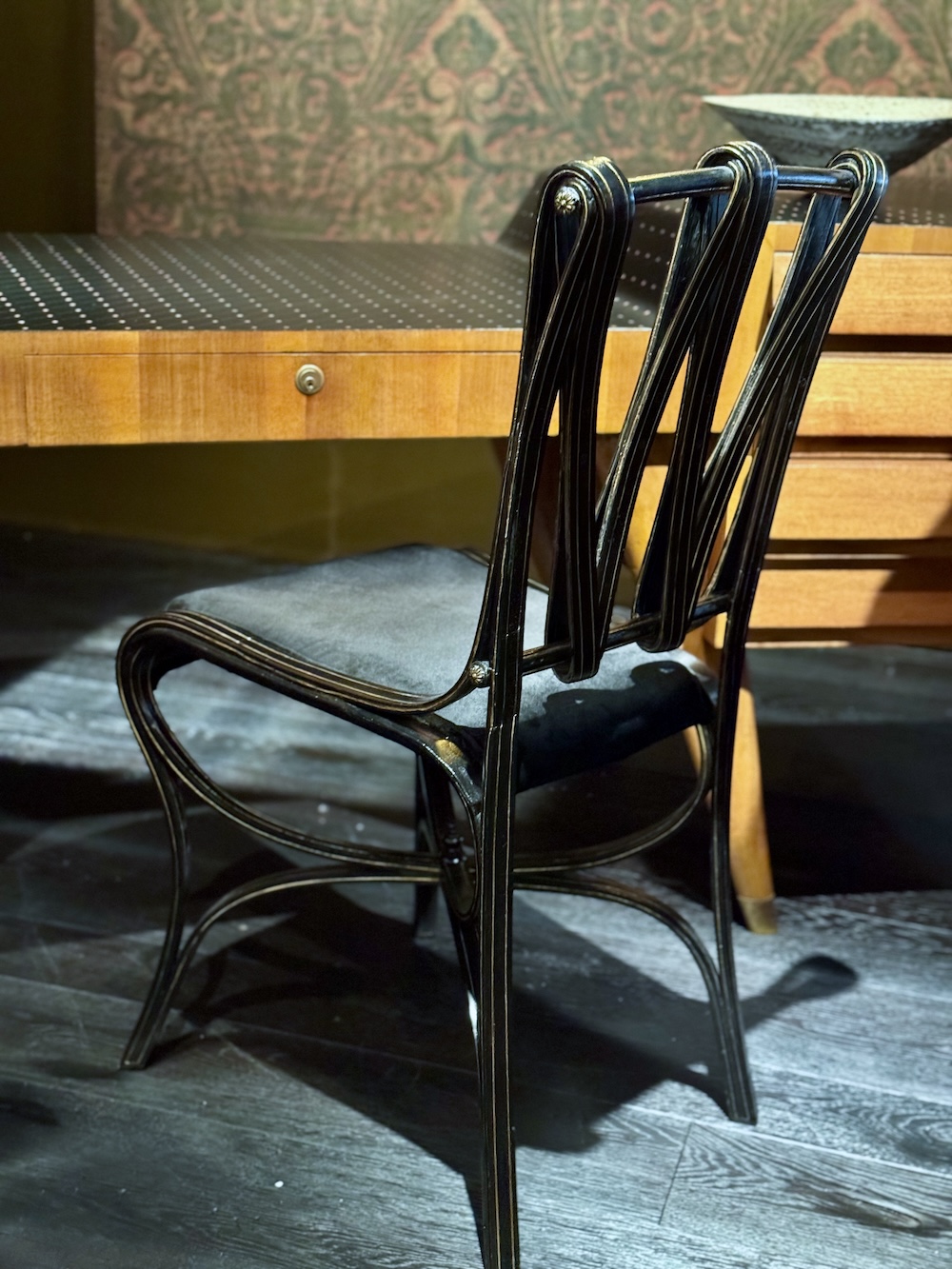
Like her interiors, Rose Uniacke‘s debut booth stood out for its clarity and restraint, assembling furniture and objects across periods that communicated through proportion and material rather than era. An early (c. 1883) unusual ‘Salon’ Chair by August Thonet with its signature steam-bent wooden bands and reupholstered in black velvet, was a thoughtful pairing with a Gio Ponti Fratelli Radice desk.
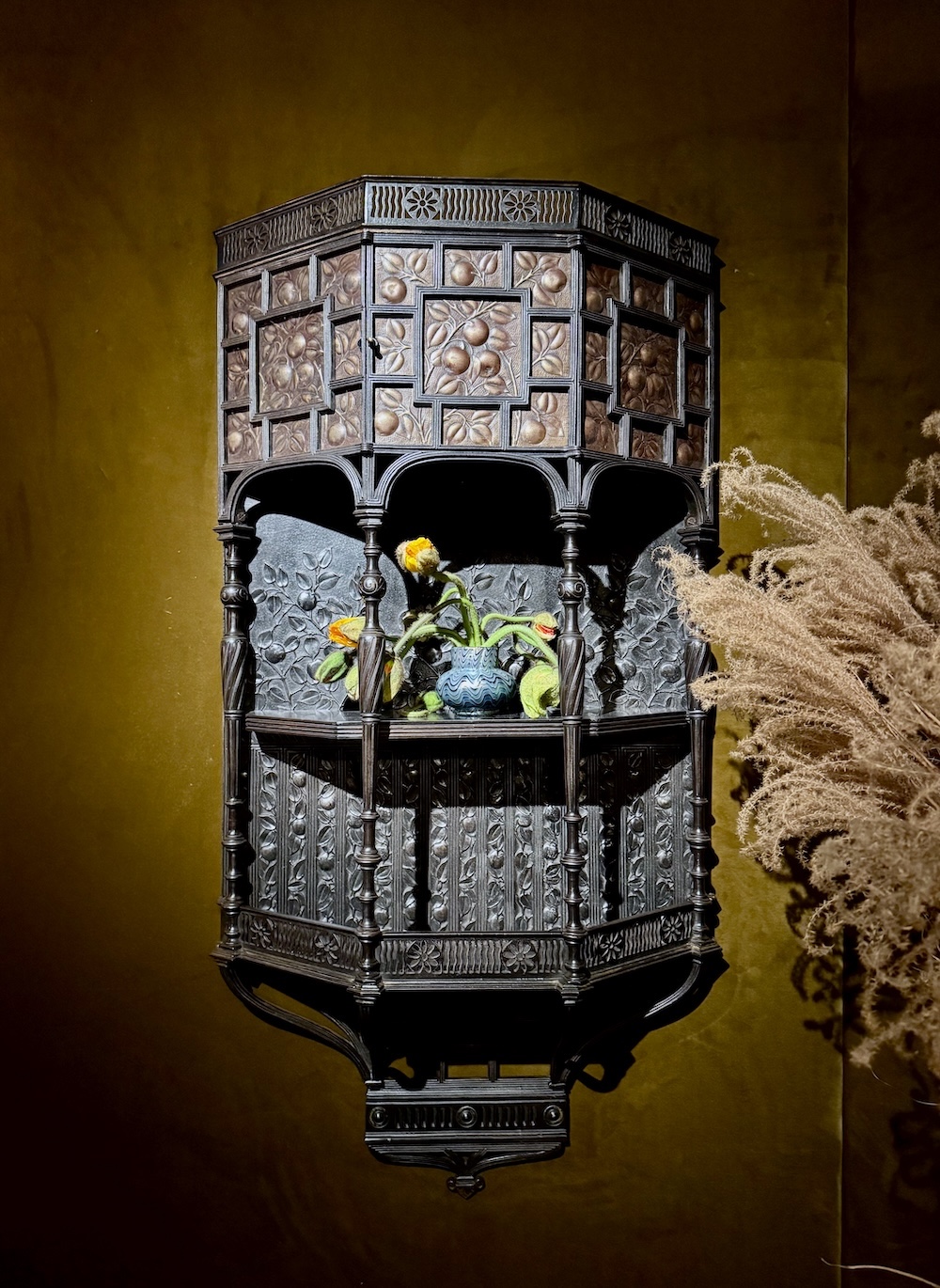
This intricate wall cabinet is a stunning example of how the Aesthetic Movement in England drew inspiration from Japanese art and design, melding it with their belief in beauty as a civilizing force where fine craftsmanship, restraint and poetic ornament come together in perfect harmony.
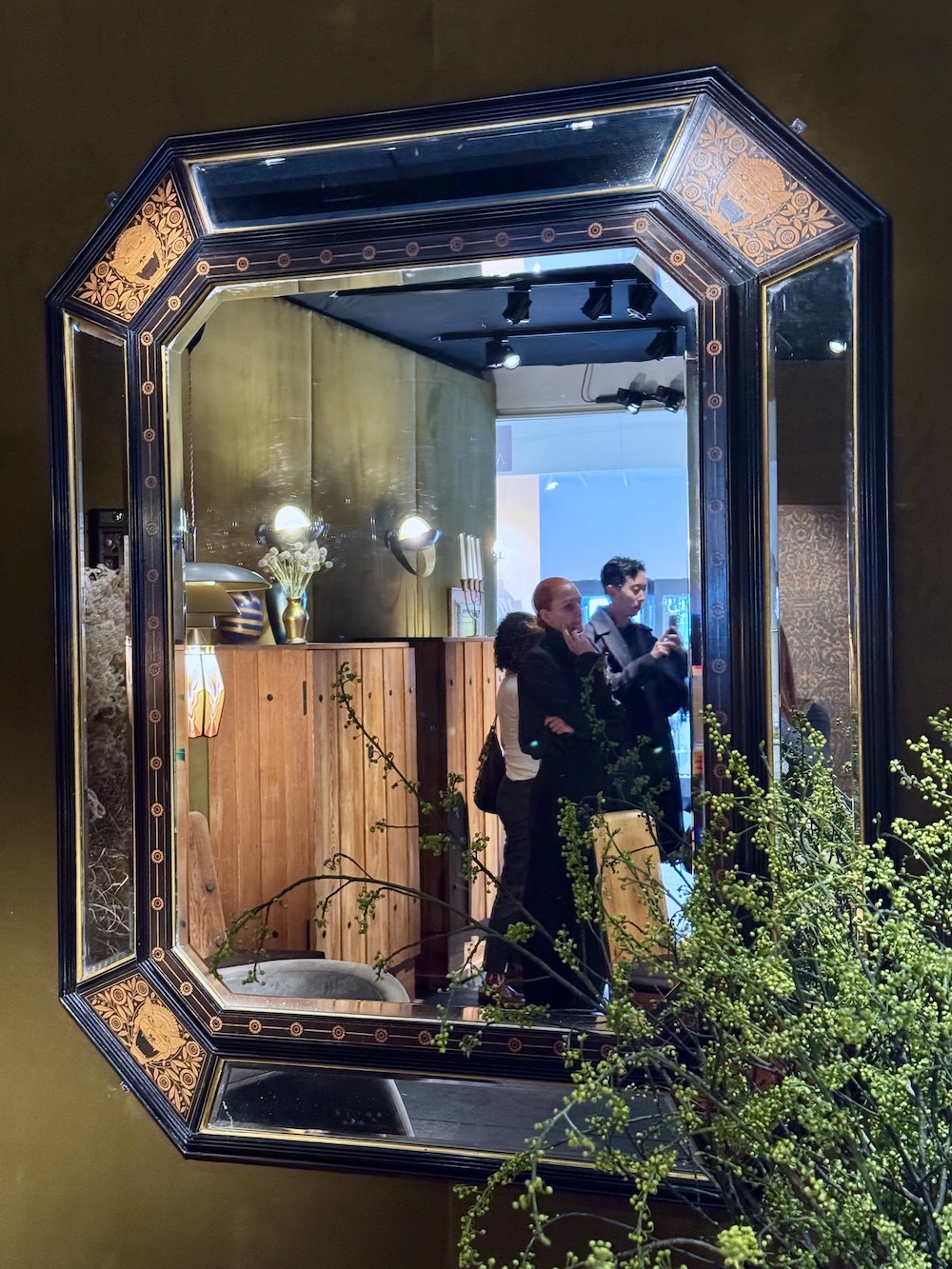
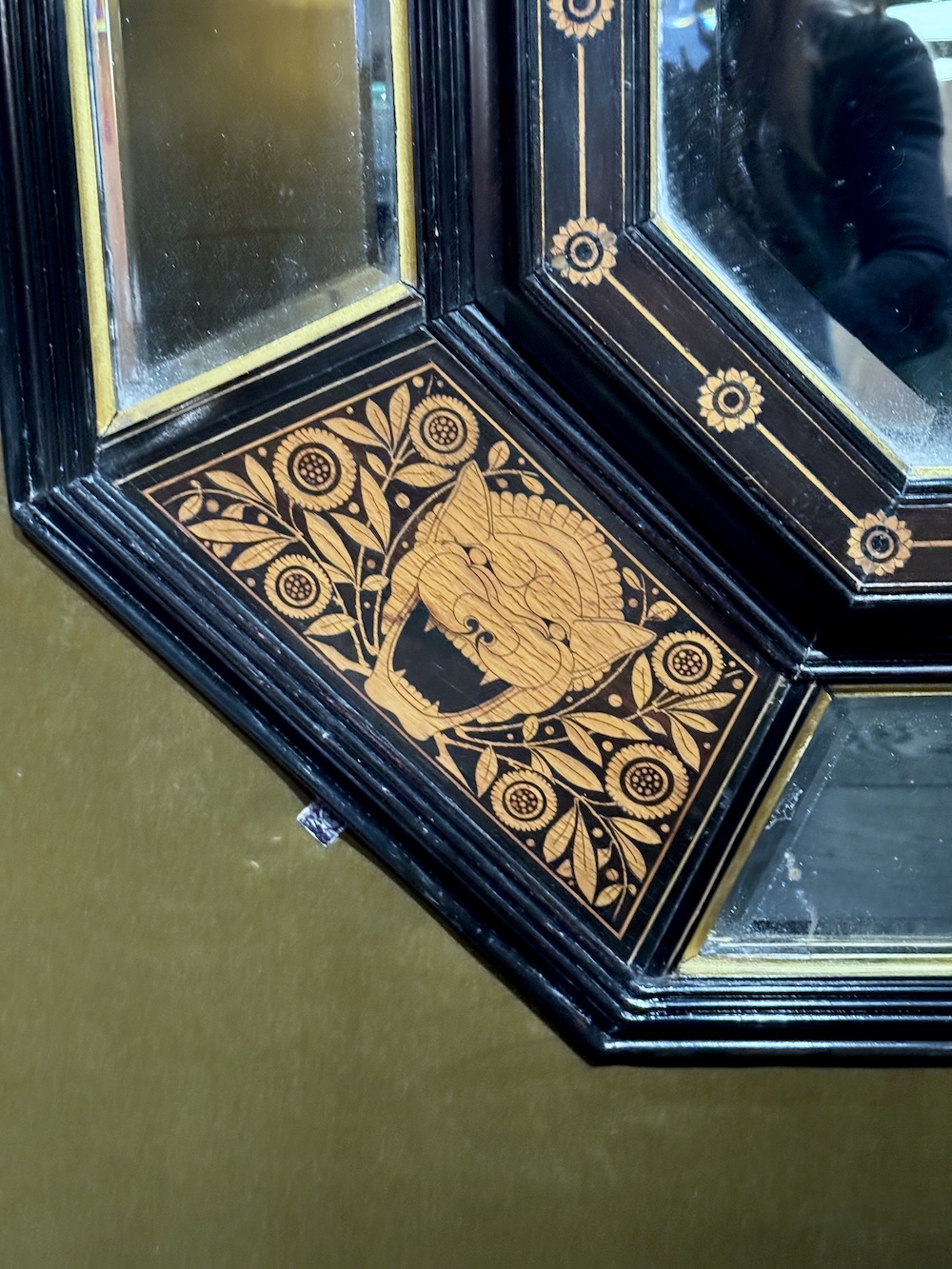
This imposing Aesthetic Movement mirror, with its stunning execution in ebonized wood, marquetry and gilt accents, stands as a compelling testament to the Herter Brothers’ pivotal role in shaping late 19th century American design. As cabinetmakers and interior designers to American’s most powerful Gilded Age patrons, they helped define an elevated vision of domestic luxury.
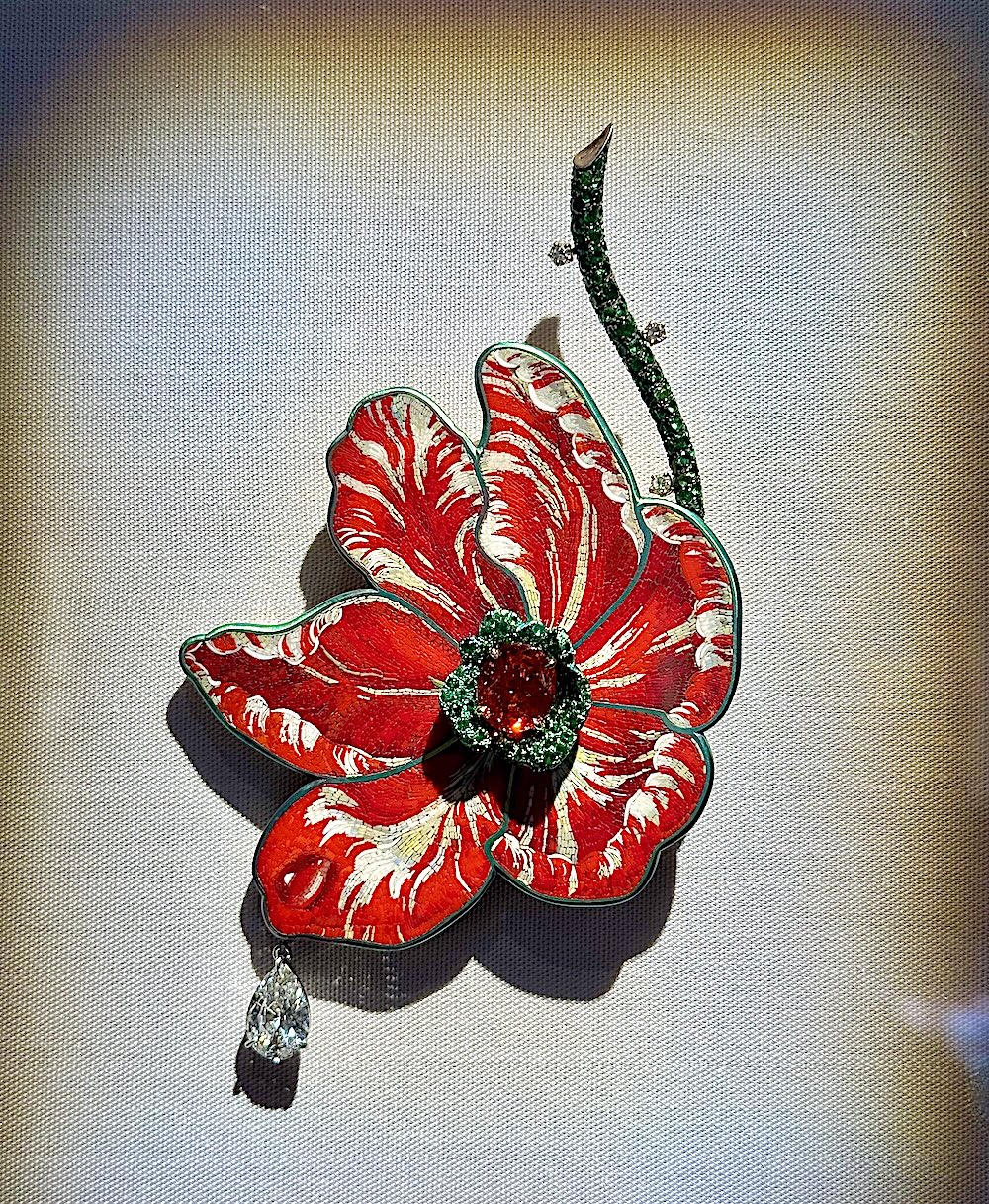
Joining the show for the first time from London, Symbolic & Chase brought an exquisite collection of contemporary and antique jewelry. You had to look carefully to see that this incredible ‘Tulip’ brooch by Maurizio Fioravanti is actually a micro mosaic. Past and present meet in this extraordinary piece, executed with botanical precision, contemporary techniques and gemstones recalling the tulips celebrated in Dutch Golden Age paintings and the abundance in those 17th century artworks.
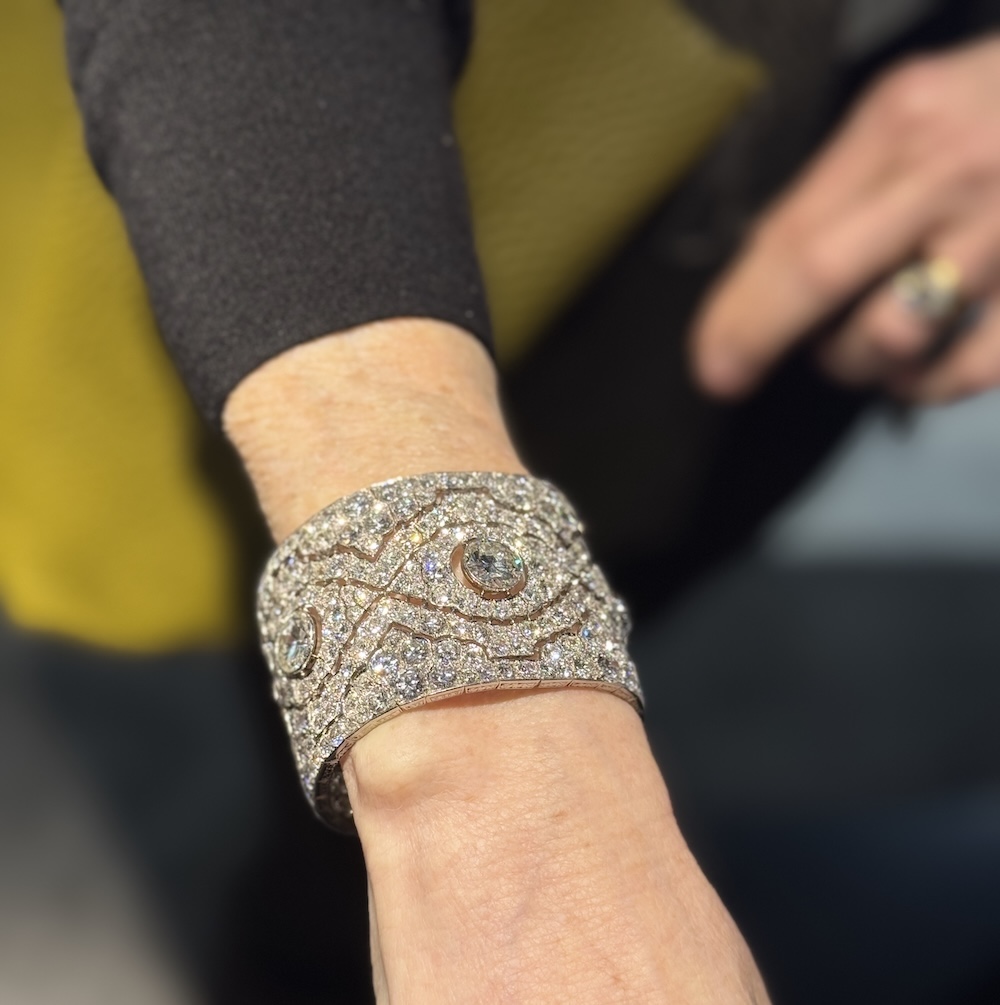
I couldn’t resist taking this glorious diamond bracelet for a spin. Guessing that this is late Victorian to Edwardian, as the “eye” form aligns with late Victorian symbolism and the flexible setting was popular then as well. A bold and elegant statement!
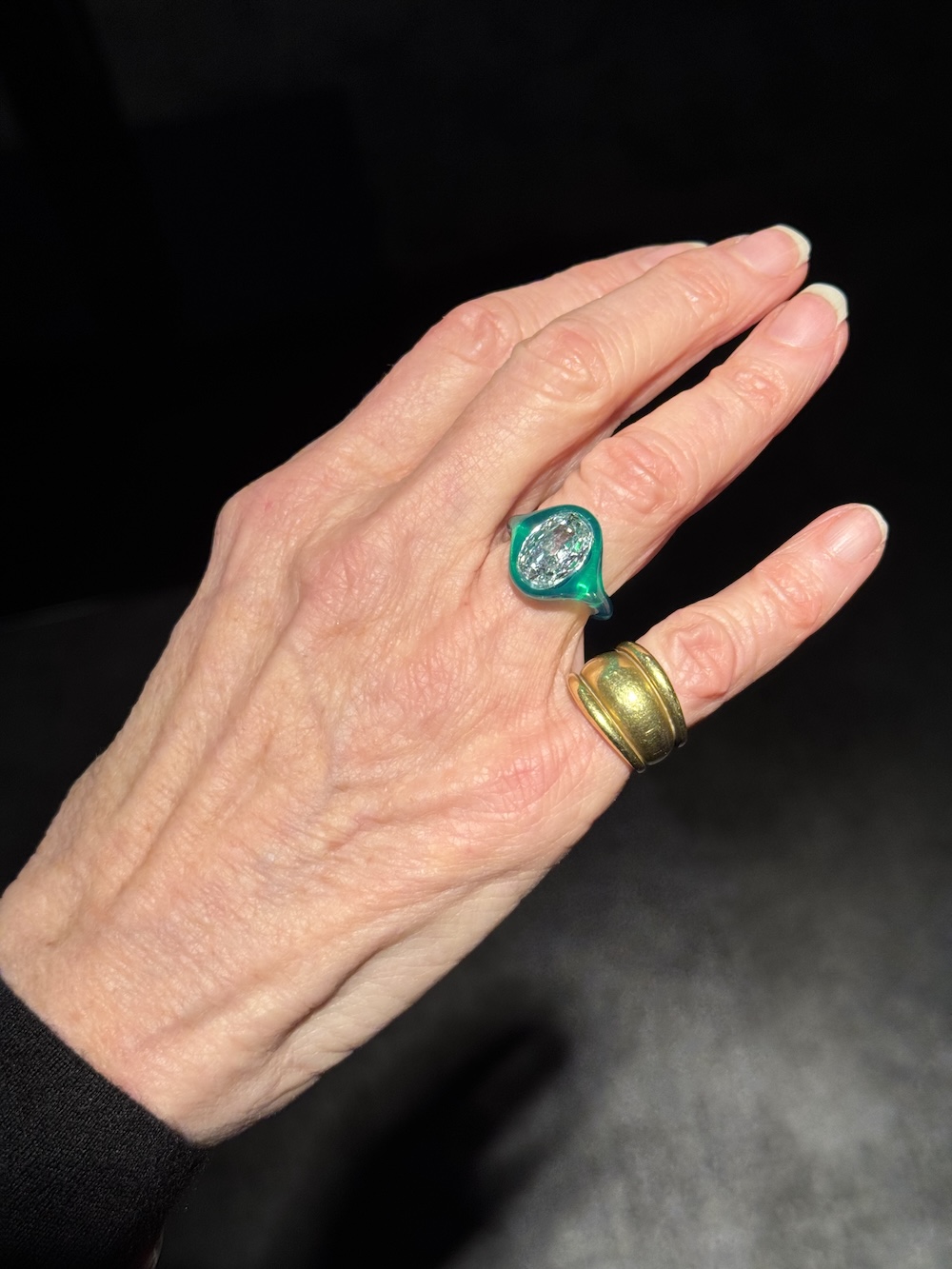
A contemporary piece I admired was this Theodoros ring with a striking combination of translucent green lucite and diamond. Chic, lightweight and easy to wear, it was a tough one to leave behind.
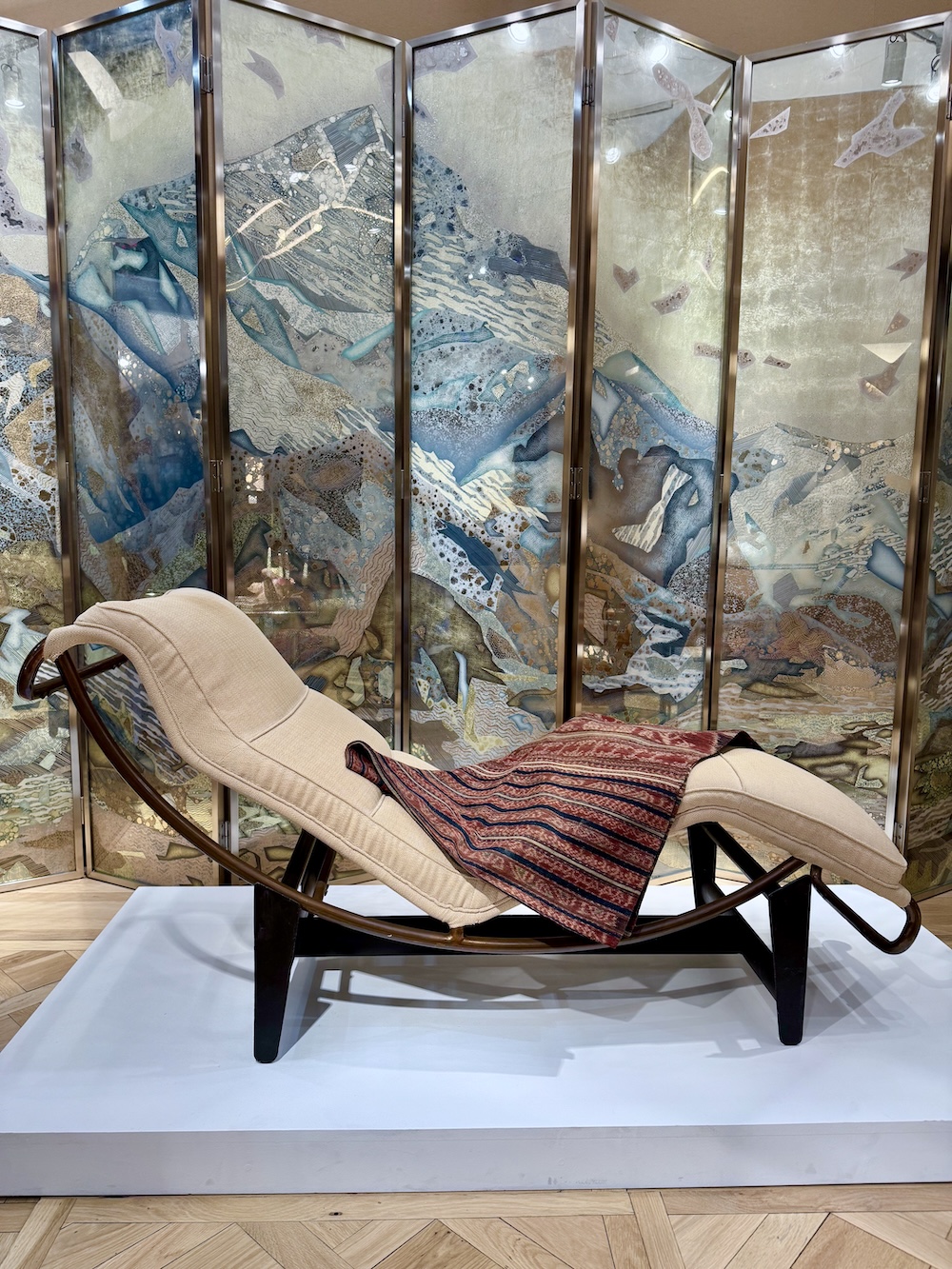
As ever, Maison Gerard‘s booth was an eclectic mix of significant works. Center stage was a chaise long designed by Charlotte Perriand with Le Corbusier and Pierre Jeanneret – a triumphant trio if there ever was one. Produced by Thonet, it was owned by Yves Saint Laurent and Pierre Bergé.
Behind is a monumental eight-panel eglomisé glass screen, Gstaad, by artist Miriam Ellner. The magnificent alpine view, created on glass with multiple precious metals, reflective textures and polychromes is a stunning evocation of the mountainous Swiss landscape.
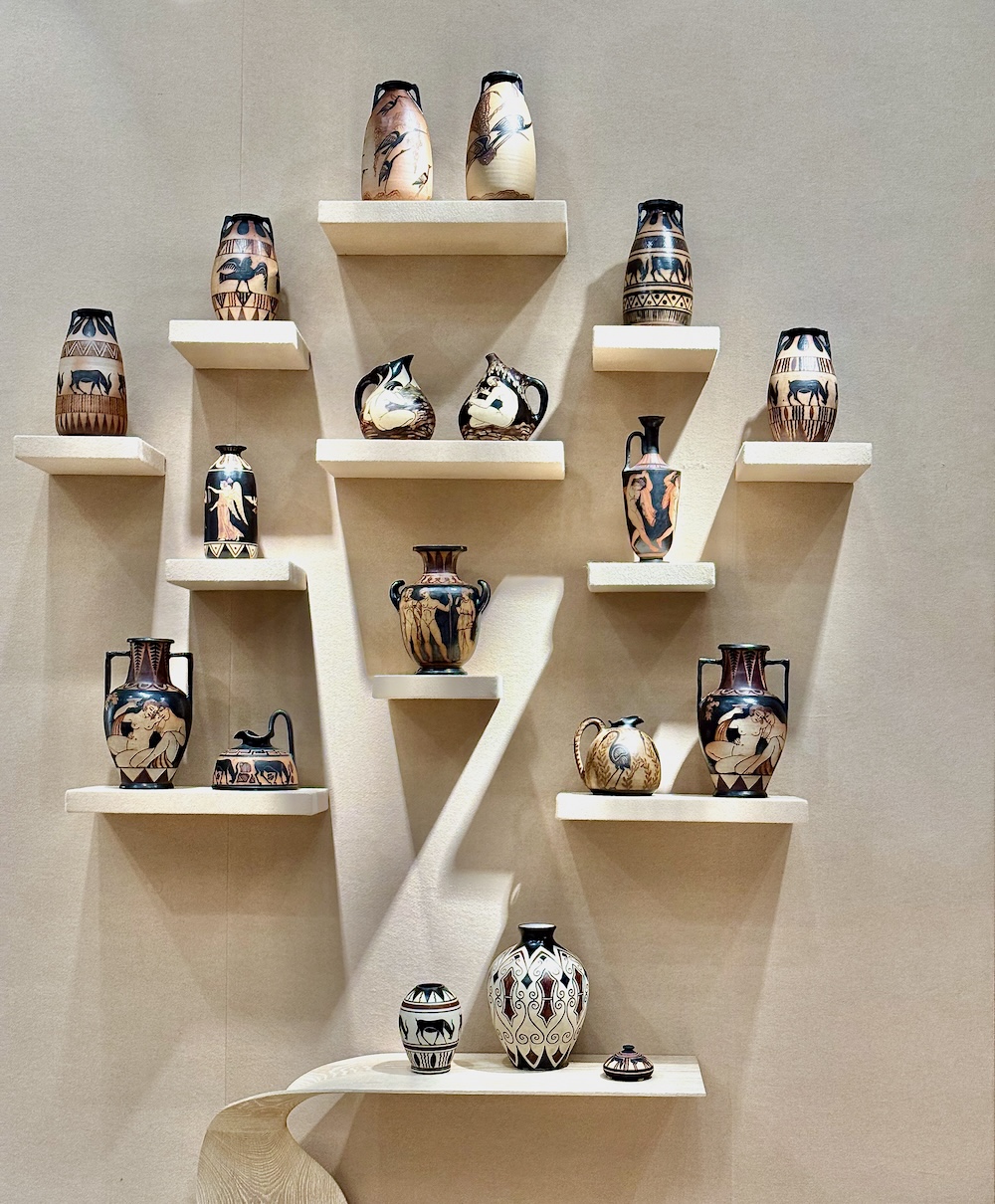
Included in the booth was a marvelously displayed collection of early 20th century Ciboure pottery, mostly from their period when the focus was inspired by Ancient Greek terracotta pieces.
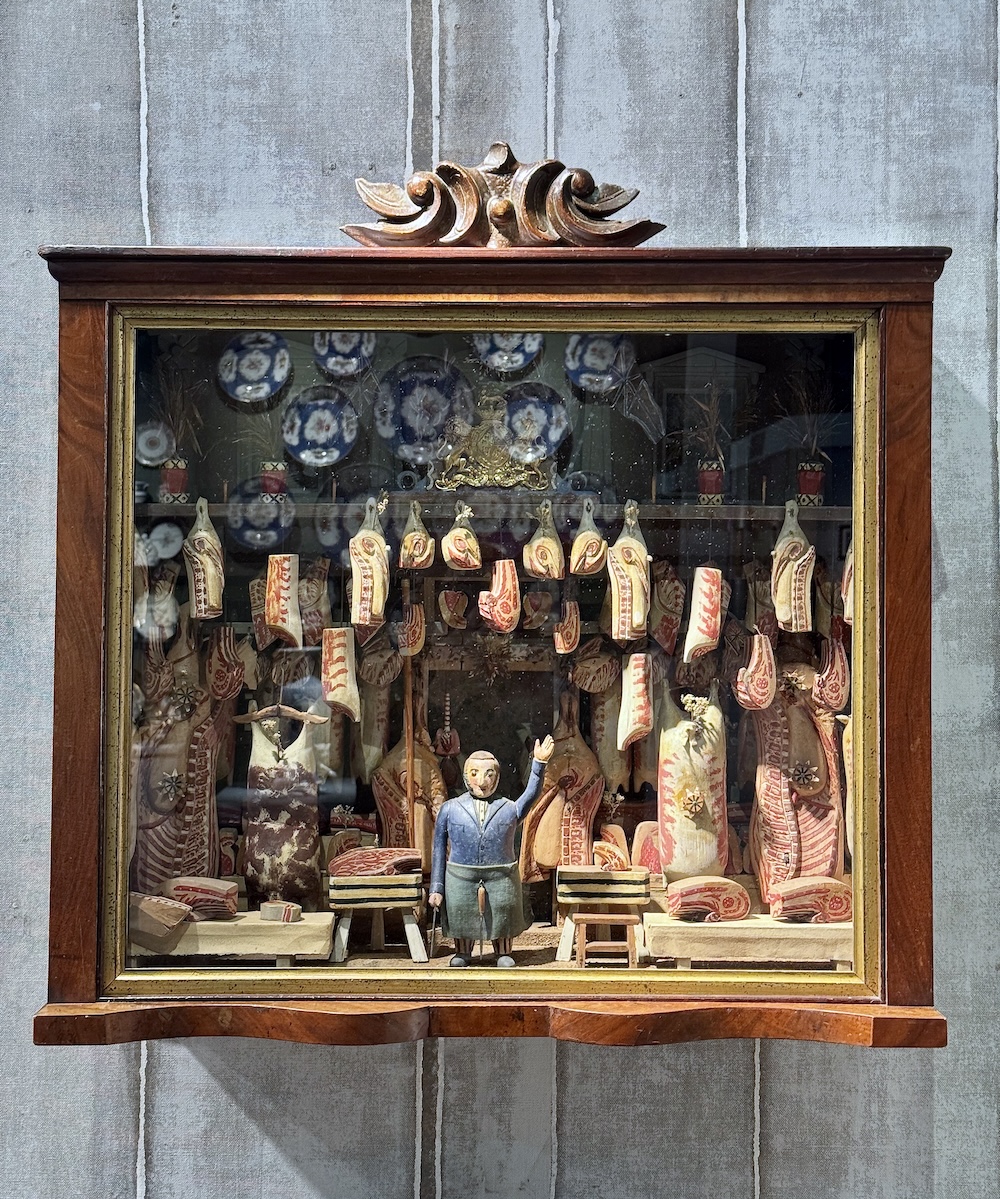
One of the more unusual artworks was this charming diorama in Robert Young‘s booth. A remarkably detailed work of folk art, this large example features the interior of a butcher shop with intricately carved figures and meats. The dealer believes it could have been created to celebrate Queen Victoria’s Golden Jubilee in 1887 due to the inclusion of the gilded Royal Coat of Arms.
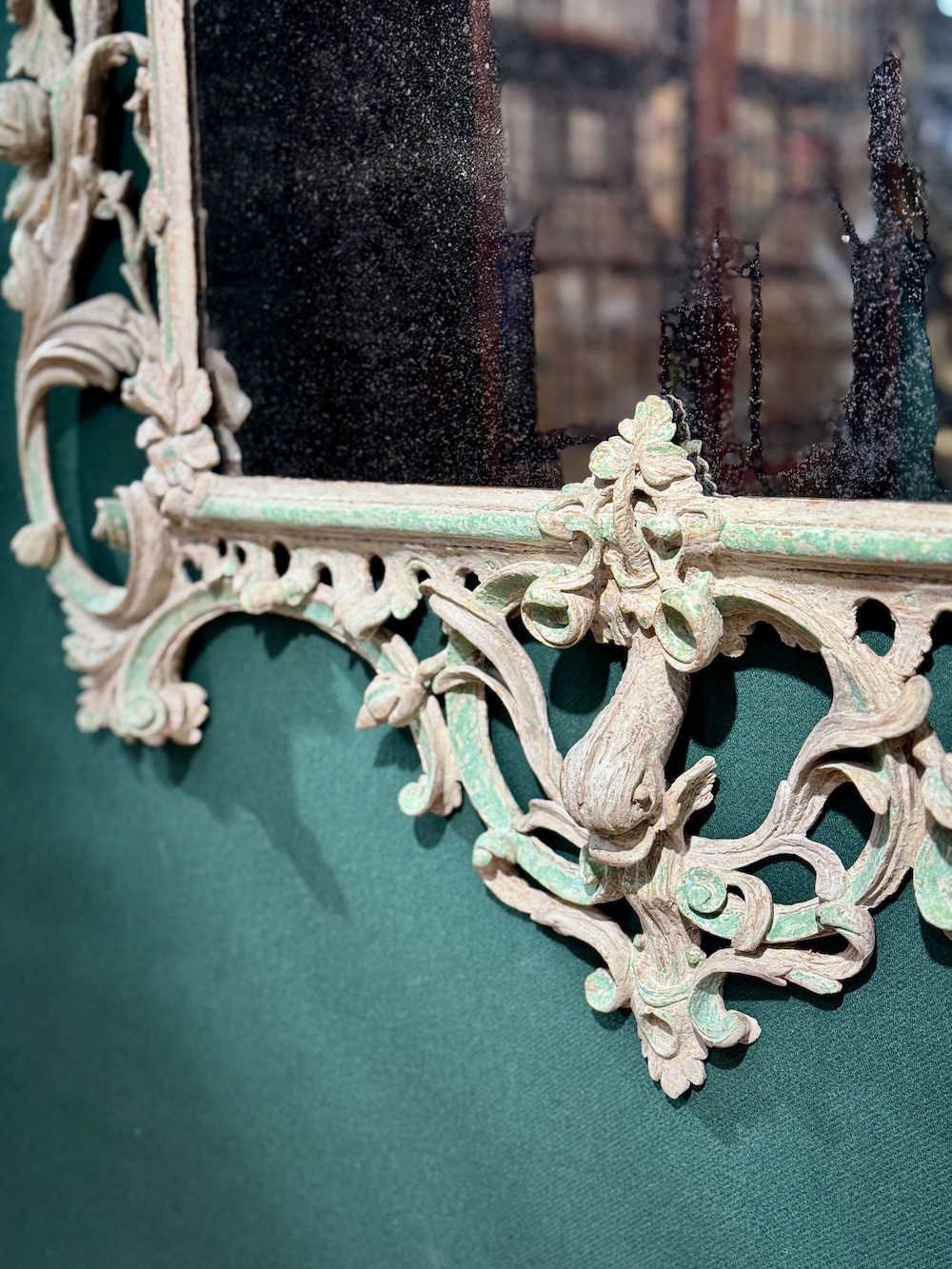
Chinoiserie mirrors are always a favorite and Ronald Phillips showed an extremely rare pair of large George III examples.
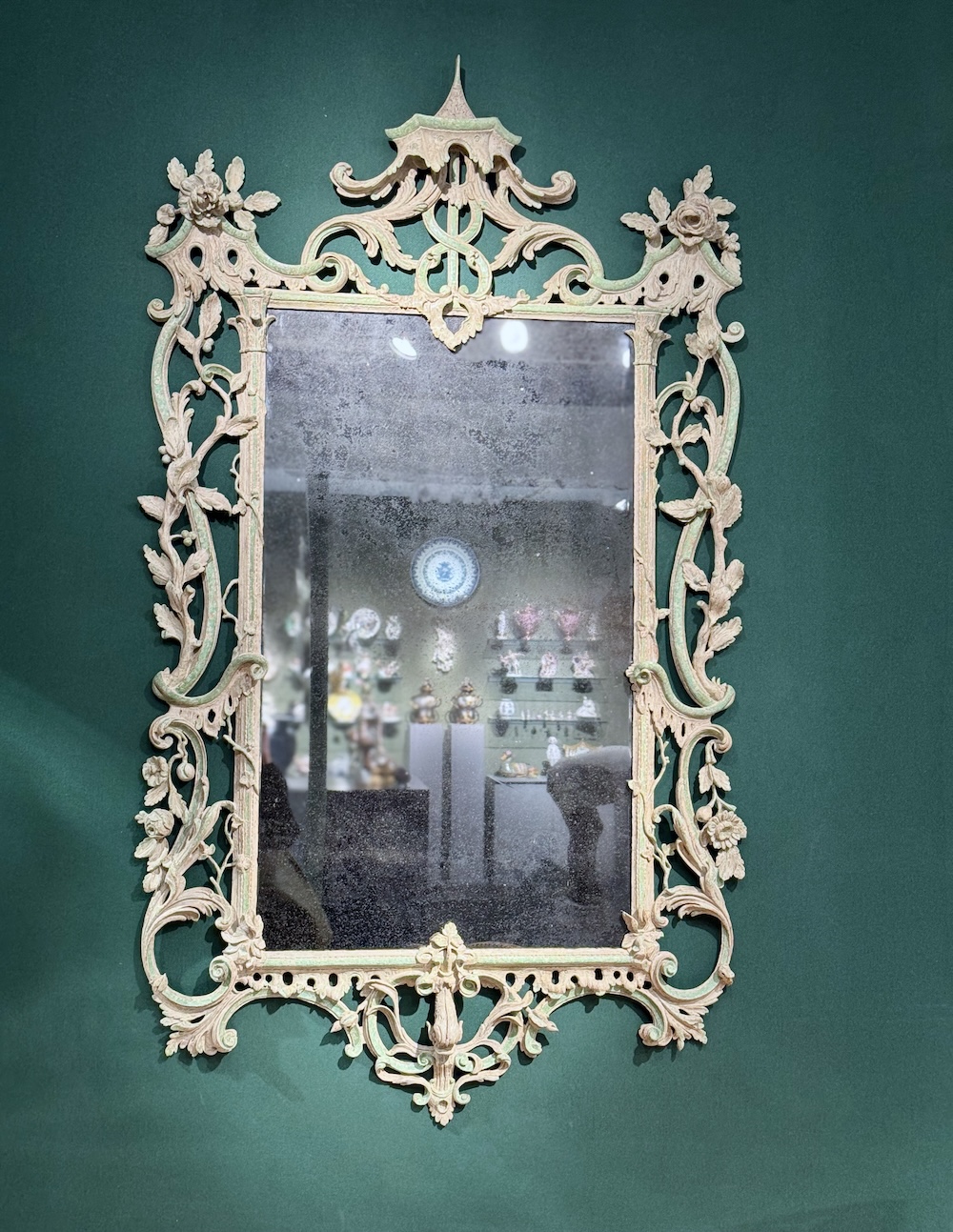
The original painted decoration was especially appealing.
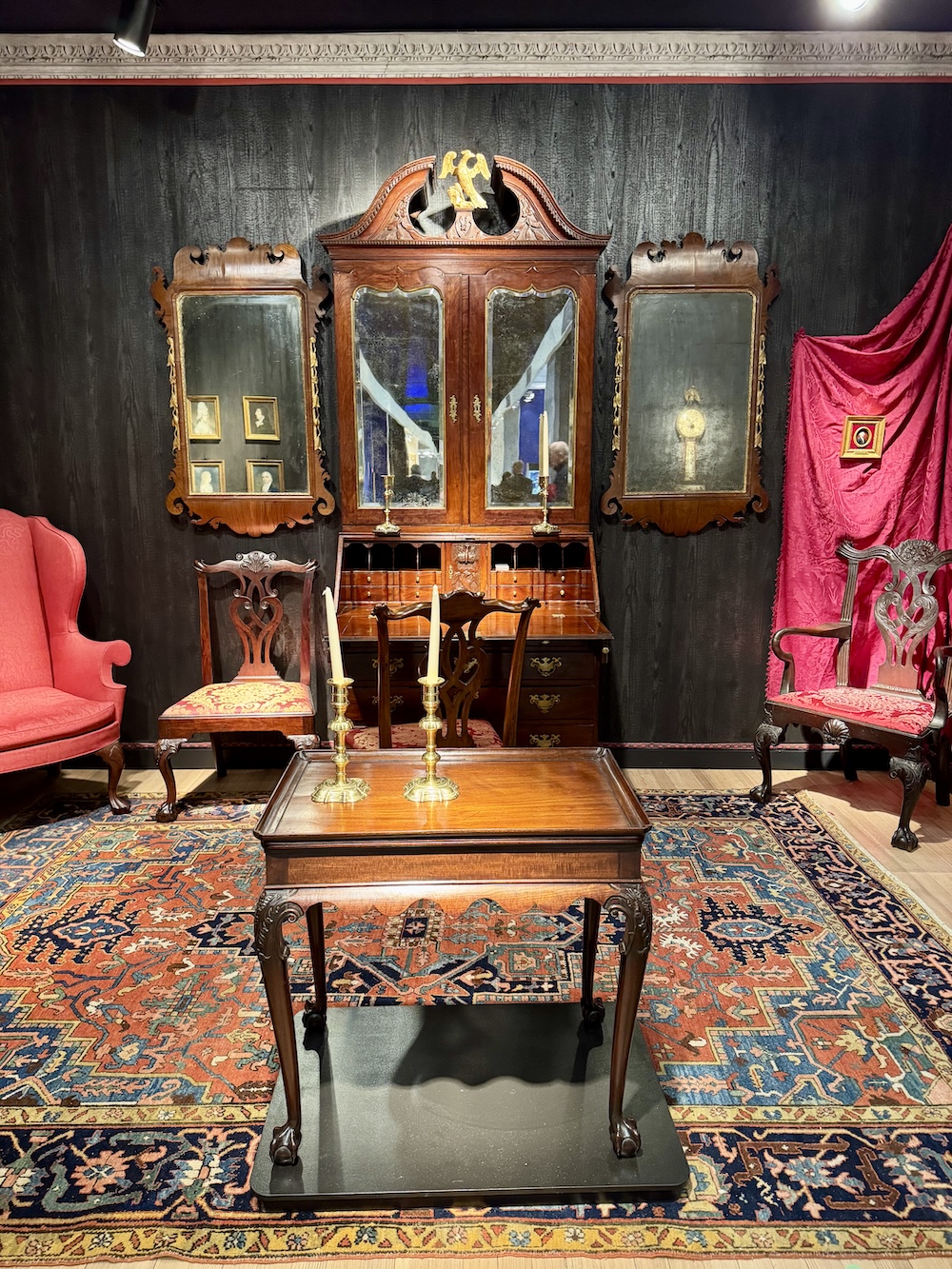
Levy Galleries, the distinguished dealer of Americana, showed this impressive Chippendale carved secretary, made in New York circa 1765,
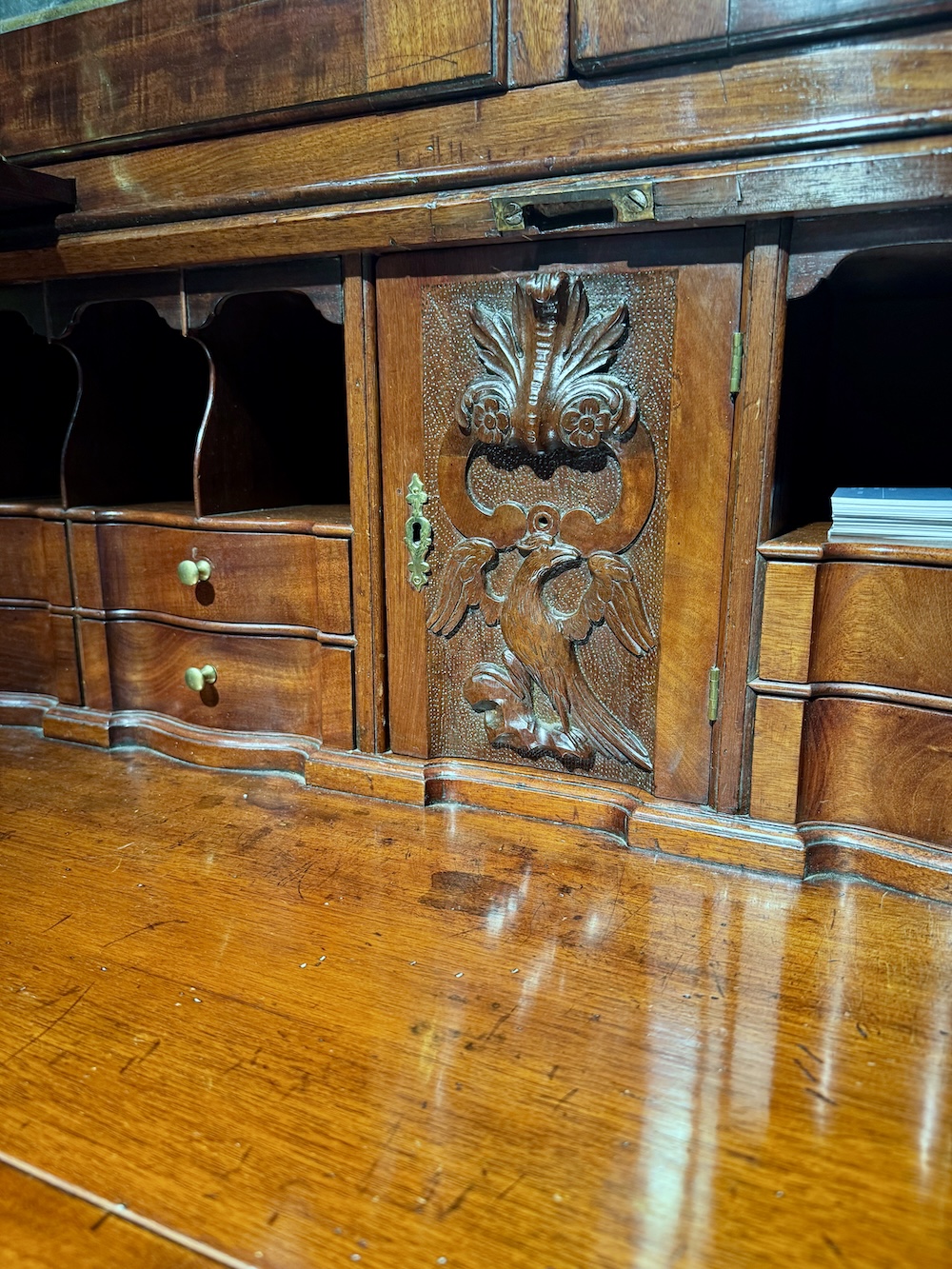
with a handsomely carved prospect door.
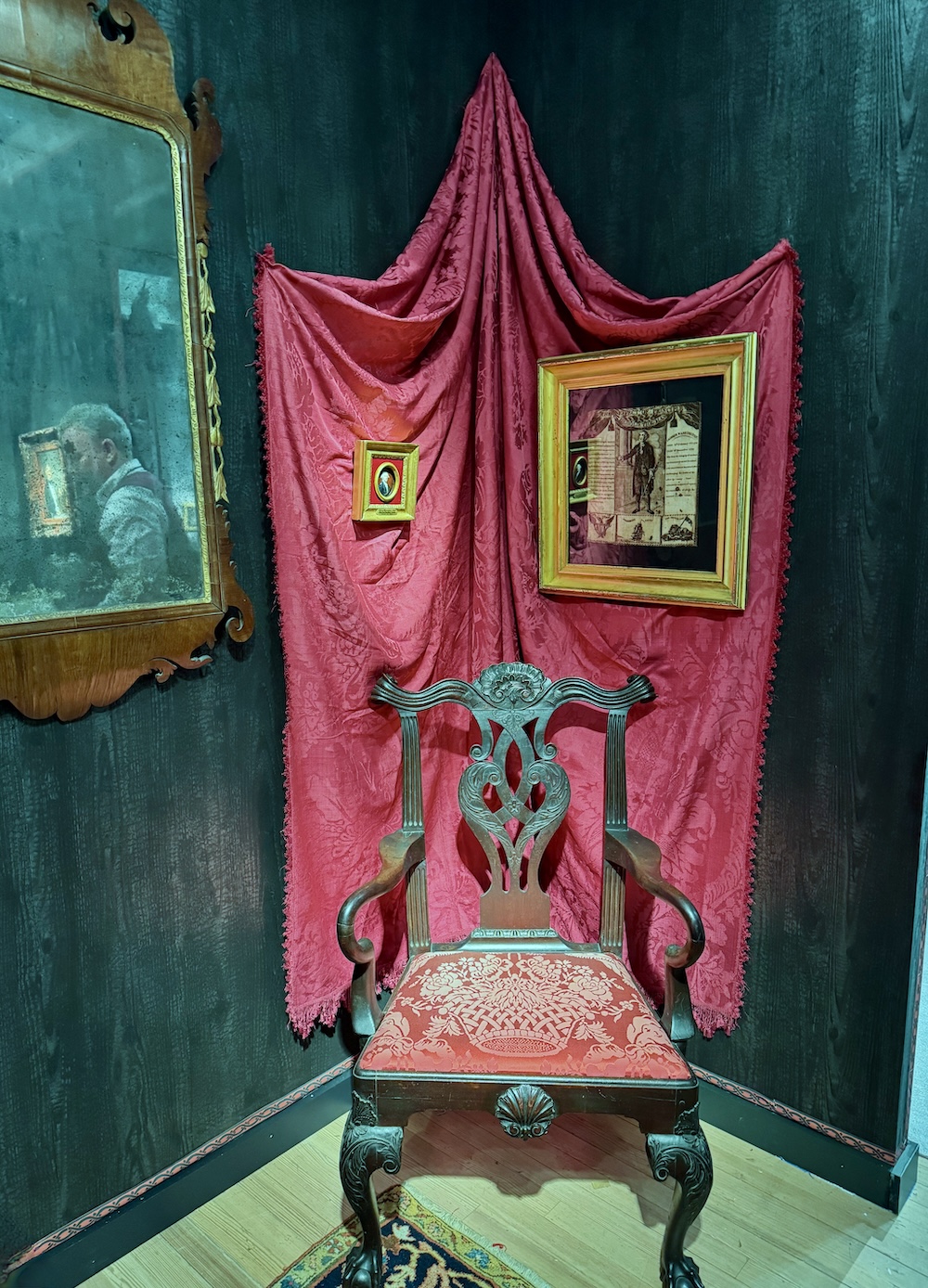
In the booth, designed by long time collaborator Ralph Harvard, a corner was dedicated to all things George Washington, including a Chippendale armchair from c 1770 once in the presidential house in Philadelphia, who mate is at Winterthur along with a surviving set of five side chairs.
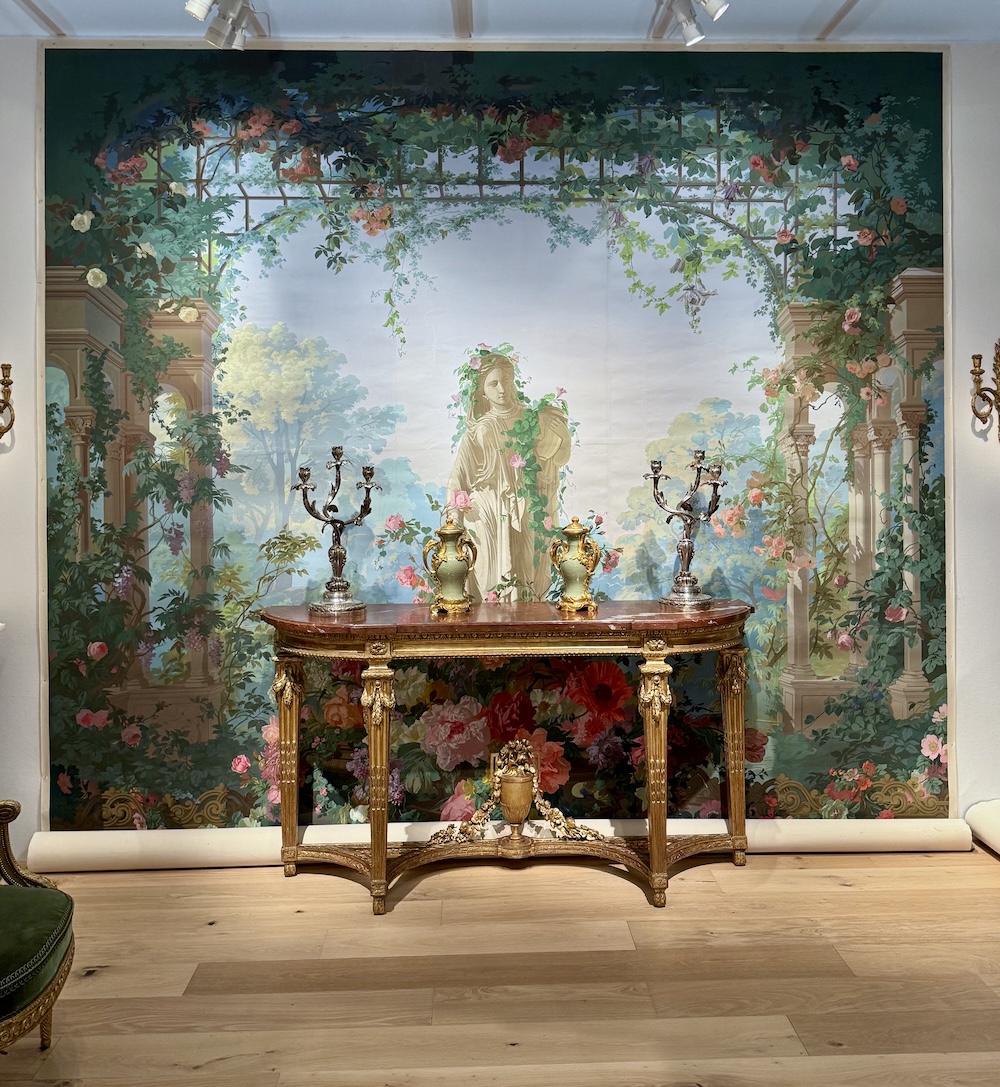
Carolle Thibaut-Pomerantz and Galerie Léage once again collaborated on an elegant booth featuring Thibaut-Pomerantz’s historic wallpapers with the French dealer’s 18th century furniture and works of art. Below, the mid 19th century wood block-printed Le Jardin d’Amide with a neoclassical console and rare pair of gilt-bronze mounted celadon vases.
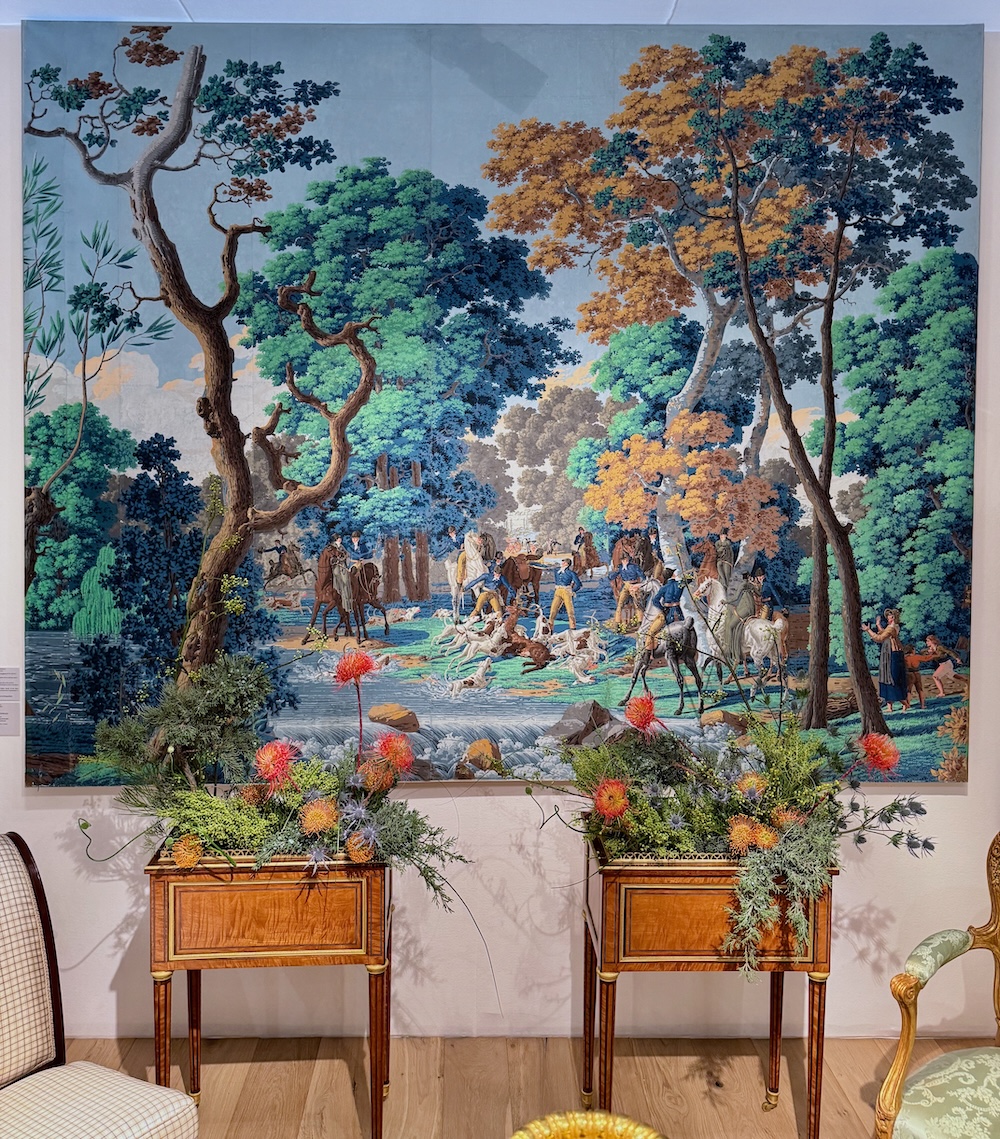
Below, the scenic panoramic Chasses de Compiegne from 1815, once owned by and in the Alsatian home of Jean Zuber (founder of Zuber manufacture) sits behind an elegant pair of Louis XVI period satinwood planters.
As ever, the experience of the show was defined by range and restraint. In an art world increasingly driven by speed, scale, and novelty, The Winter Show 2026 quietly reasserts its relevance. It reminds us that discernment still matters, that continuity has its own power, and that the most lasting impressions are often formed not in moments of excess, but in acts of careful looking.
all photos by Stacey Bewkes for Quintessence


Some…actually “took my breath away!!!” THAT SCREEN, THAT MURAL…well, many took my breath away…KUDOS!! ❤️
franki
Thank you Franki! Glad you enjoyed tagging along.
Always outstanding. So many beautiful takeaways.
Thank you Mary Ellen!